Sunday, October 3, 2021

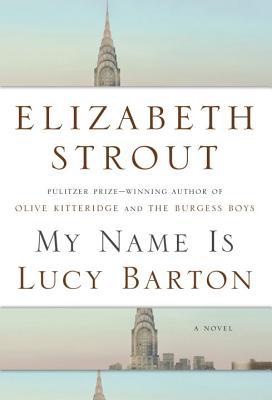
Review: My Name is Lucy Barton (by Elizabeth Strout)


My Rating: 5 stars

After reading both of the Olive Kitteridge books a few years back, I immediately put Elizabeth Strout on my list of favorite authors.  As I had mentioned at that time, I've had most of Strout's works on my TBR for a while, but hadn't gotten around to reading all of them.  Now I am slowly working my way through her backlist and decided to pick up My Name is Lucy Barton next, mostly because I got approved for an ARC of Strout's newest book publishing this month and it is a more direct sequel to that book (though technically the third in the entire series) so I want to make sure I read it first. 

I was actually surprised by how short this book was (less than 200 pages), yet it packed such a punch in terms of depth of the story as well as its characters.  Strout is a masterful writer and just like she did with Olive Kitteridge, she once again creates a realistically flawed yet highly memorable character in the form of Lucy Barton.  While recovering in the hospital from what she thought would be a simple operation, Lucy is surprised to see her mother, from whom she had been estranged for many years, go visit her and sit by her bedside for several days.  Together, mother and daughter reminisce and gossip about various friends from Lucy's childhood growing up in Amgash, Illinois (though they are careful to skirt around the specific issues that had caused Lucy to escape her troubled family and move to New York after marriage).  The visit from her mother, though brief, leads Lucy to reflect upon various aspects of her life — from recognizing the impact of the poverty and abuse that she grew up with, to seeing the vulnerabilities present in her marriage, to realizing her desire to become a writer, to understanding that even her unconditional love for her own two daughters does not guarantee that love will always be reciprocated.   

Many of the struggles that Lucy reflects upon are ones that many of us can relate to, regardless of differences in background and status.  With that said, Lucy's role as a daughter and the nuances of her relationship with her mother resonated the most with me, as there were quite a few moments where I recognized aspects of her relationship with her mom (and with her family as a whole) that were similar to what I had experienced.  One particular conversation that Lucy had with her mom especially jolted me — the one where Lucy uses a certain word that surprises her mother, who in turn, comments that she must have learned to use that word after moving to the big city, to which Lucy replied that she didn't have to move to a big city to learn such things.  In that moment, Lucy could've called her mom out on her "willful ignorance" of the things that were happening under her roof at the time (things that contributed to the strain in their relationship all these years), yet she chose to keep her mouth shut.  Reflecting on this moment later, Lucy writes "I suspect I said nothing because I was doing what I have done most of my life, which is to cover for the mistakes of others when they don't know they have embarrassed themselves."  In reading this, I realized this is exactly what I've been doing with people in my own life, but especially with my mother whenever she says things (often in front of others) that are hurtful or insulting — in that one sentence, Strout (through Lucy) helped put words to something I've struggled with for a long time.  It is the power of being able to experience resonant moments like these that motivates me to be a lifelong reader — constantly learning, understanding, and reflecting on various aspects of my own life.

I know Strout wrote another book, Anything is Possible, that is a continuation of Lucy's story in a sense, though she is only a small part of that book in that she returns to her hometown to visit her siblings, but mostly it is a collection of short stories about people she reunites with there. While I do intend to read this second book at some point, I'm actually more excited to read her newest book, Oh William!, where Lucy tells her first husband's story.  Definitely can't wait!

Friday, October 1, 2021

Review: Cloud Cuckoo Land (by Anthony Doerr)

My Rating: 4 stars

Anthony Doerr's masterpiece All the Light We Cannot See is one of my all-time favorite books.  I read it with my book club several years ago and the beautiful writing as well as the captivating storyline absolutely blew me away.   The reading experience I had with that book remains one of the most memorable for me, even after the dozens of books I've read since then.

Given the above, it should of course come as no surprise that when I heard Anthony Doerr would have a new book out this year (his first since the above-mentioned masterpiece), I absolutely knew I had to get my hands on it.  A few months ago, when I was approved for an ARC of the book, I was ecstatic and couldn't wait to read it, despite the fact that, upon reading the summary, I knew that segments of the story wouldn't interest me (specifically the "science fiction" parts, since that's a genre I don't typically enjoy). The fact that this one would be long (600+ pages) also didn't help things, since I already had a huge list of books that I was hoping to get to this month.  

Well, I finally decided to pick this one up last week and while there were definitely parts of it I enjoyed, I was actually a bit underwhelmed overall, especially in comparisons to All the Light We Cannot See. Of course, the writing was excellent (which was expected), but I felt that there was way too much going on in terms of story arcs, which made this too exhaustive of a read for me.  In addition to the narrative alternating between 5 different characters who each have their own separate but interconnected storylines, the timelines and settings were all different as well, so structure-wise, there was a lot of jumping back and forth, both going forward in time as well as backward, to explain various events that were happening.  On top of that, there was also the ancient story of Aethon (the titular "Cloud Cuckoo Land" story) that was interwoven throughout all 5 threads that, in a sense, connected all 5 story arcs together to form a 6th storyline.  All of these threads going on simultaneously made it hard to keep track of everything but I think most difficult of all was the jarring experience of being plucked from one world and placed into another, then a couple pages later, it happens again, over and over.  It also didn't help that much of the story (in terms of theme) revolved around various aspects of science, technology, ecology, climate, geology, space exploration, etc., which there is nothing wrong with of course, it's just that "science-y" stuff has never interested me, so when there is an overload of it, even in a masterfully written work such as this one, I still found it extremely difficult to engage with the story.

Needless to say, I struggled with how to rate this one, as I did enjoy a large part of this, especially the last third or so when each story arc started to pick up speed and converge, making the connections between some of the threads more apparent.  With that said though, the ending left me with more questions than answers — to be more specific, I actually didn't "get" the ending (despite reading it twice), which doesn't happen often, but is absolutely frustrating when it does.  On a separate note, I did love the way the characters were written, all of them so well-developed with distinctive voices that made them seem so real to me — I think if the story had been structured differently, in a way where I would've been able to engage more with the characters, my reading experience would've been very different.

This was a very ambitious book and I definitely admire what Anthony Doerr tried to do here.  While I'm glad I read this and it was absolutely worth the time spent, I unfortunately didn't love this like I was hoping I would.  In the hands of a more literary reader, I'm sure the reaction would likely be different.  This one didn't blow me away like Doerr's previous work did, but it was still a worthwhile read that I definitely recommend, though with the caveat that, depending on your level of interest in the subject matter, will probably require a certain amount of patience as well as time to read.  

Received ARC from Scribner via NetGalley


Tuesday, September 21, 2021

Review: When Ghosts Come Home (by Wiley Cash)

My Rating: 5 stars 

This was such a fantastic read! Wiley Cash is another one of those authors whose works I've had on my TBR for a while but never got around to reading. Despite this being my first book of his, I still went into this one with high expectations, mostly because I've heard so much about his works and how great of a storyteller he is — I wanted to see / experience it for myself. Well, I can say with certainty now that I'm so glad I did, as I now have another author to add to my favorites list!

Set in Oak Island, North Carolina, the story follows Sheriff Winston Barnes over the course of 4 days in the fall of 1984, as he investigates a mysterious murder. On the night before Halloween, Winston is jolted awake by what sounded like the crash of an airplane — when he goes out to the airport in the middle of the night to investigate, finds more than he bargained for: next to a huge airplane lying with its tail broken on the runaway, Winston finds the body of a black man who had been shot to death. As the investigation in the subsequent days slowly brings to light the truth of what happened that night, the small island town is forced to reckon with the community's deeply rooted racial prejudices that get repeatedly stirred up by a Confederate flag-toting local man hellbent on ousting Winston from his job. There were technically three different threads to the narrative — the main one told involving the investigation into the mysterious abandoned plane and an equally mysterious murder, a secondary thread from the perspective of Winston's daughter Colleen, who returns to her parents' home bearing insurmountable grief over a devastating loss, and a third thread from the perspective of Jay, a teenaged black boy who is also he brother-in-law of Rodney Bellamy (the man found murdered on the airport runway). Through these three intertwining perspectives, the full picture of what happened eventually emerges.

In addition to the fabulous storytelling, the other thing I loved about this book was the realistic depiction of the characters, to the point that I felt like I was reading about real people dealing with real issues. There was also an incredible sense of time and place, which, combined with the well-developed characters and he beautiful, descriptive writing, made this a truly immersive reading experience. This book also hit the mark on an emotional level, as various parts of the story made me simultaneously sad, angry, heartbroken, yet also hopeful, especially during those moments when certain characters stood up to the hatred and bigotry that permeated particular sections of the community. The ending was gut wrenching and unexpected— it actually took me by surprise and made me shed real tears (which doesn't happen often).

As I mentioned earlier, Wiley Cash is now on my list of favorite authors and I am definitely looking forward to exploring his backlist! If you're looking for a powerful, timely story that has a elements of historical fiction, family saga, murder mystery, exploration of various community and social justice issues, etc., this is a perfect read — one I absolutely recommend!

Received ARc from William a Morrow via NetGalley

Saturday, September 18, 2021

Review: Harlem Shuffle (by Colson Whitehead)

My Rating: 4 stars

The last couple of years, Fall has been a particularly busy reading season for me due to the fact that a lot of my favorite authors (or famed authors whose works I've been wanting to read but hadn't gotten around to yet) release new books around this time and I end up scrambling in a harried attempt to get to each and every single one of those books — a feat that is 10 times more difficult with a full-time job and family obligations that oftentimes leave me with little time for myself.  Yes, I know this is a self-inflicted bookworm problem (sorry / not sorry?) and I am by no means trying to elicit sympathy, it's just that when I opened up my book tracking app today and saw that I this was only the fourth book I've finished out of a (wildly unrealistic) goal of 13 for this month (yes, you read that right — 13 books for the month of September), I felt the need to vent, if merely to just get it off my chest.  Whew!  Ok, back to the matter at hand…

The aforementioned 4th book (out of 13) that I just finished is Colson Whitehead's newest release Harlem Shuffle.  Whitehead is one of those famous authors whose works I've had on my TBR like forever, but for some reason or another, I haven't been able to get around to reading those works.  So when I was offered an ARC of Whitehead's latest work, I of course jumped at the opportunity (even knowing his newest book would be markedly different from his previous ones).  Going into this, I was excited to finally get the chance to "see what the hype was about" when it comes to this award-winning author.  With that said though, while I did enjoy this one quite a bit and found it to be an excellent read in many aspects — the vivid, lyrical writing, the realistic and fleshed out characters, the wonderfully rendered atmosphere of 1950s / 1960s Harlem, witty and fun dialogue, the timeliness of the social commentary, etc. — what made this a 4 star read instead of 5 star is the fact that I wasn't able to engage with the story as much as I thought I would, despite my best efforts.  This is more a reflection of my own tastes rather than any issue with the book itself — namely that I'm not much of a reader of heist and gangster stories and while this wasn't the entire focus of the story, I found it more difficult to connect with the story and therefore it was a much slower read for me.  Regardless though, this was still a worthwhile read and one that I learned a lot from, especially with the historical fiction aspect and the masterful, atmospheric way that Whitehead captured the various nuances of Harlem and New York during that particular time period.

Though I wasn't much engaged with the story, I did like most of the characters — even the main character Ray Carney with his sardonic wit as he struggles to keep the two sides of his life separate from each other.  Overall, this was a solid 4 star read, a book that I highly recommend!  I read an interview with the author last week where he mentioned that he is working on a sequel to this book that would follow Ray Carney into the 1970s era, which I definitely look forward to reading.  In the meantime, I need to get with the program and go pickup Underground Railroad as well as The Nickel Boys and other books from Whitehead's backlist.  So many books, so little time!!

Received ARC from DoubleDay Books via NetGalley.

Tuesday, September 7, 2021

Review: Rock Paper Scissors (by Alice Feeney) **Blog Tour**

My Rating : 4.5 stars

I've been a fan of Alice Feeney's work since I read her debut Sometimes I Lie, a suspense thriller I still remember to this day, even though I read it 4 years ago. That book absolutely blew me out of the water with its plot twist so well-done, that I still ponder over it even now.  I read both of Feeney's follow up novels (her sophomore novel I Know Who You Are as well as her third novel His & Hers), and while I liked both well enough, neither was able to live up to the magnificence of her debut (in my opinion at least).  Going into Feeney's fourth book Rock Paper Scissors (which publishes this month), I wasn't really sure what to expect — would this one be closer to the "blow me out of the water" experience of her debut or the "good but not too memorable" experience of her two subsequent works? (Hint: definitely the former!).  In fact, I actually feel that Rock Paper Scissors is Feeney's best work to date (and that's saying something considering how much I loved her debut). 

As is the case whenever I review thrillers, I try to be as vague as possible so as not to give anything away (which is why this review will be short and sweet without saying much).  With this book especially though, you definitely want to go in knowing next to nothing and let the story take you along for the (wild) ride.  Feeney is known for her shocking plot twists that absolutely no one sees coming — of course this book is no exception (it's actually more "twisty" than Sometimes I Lie, which I didn't think was possible, yet all the twists are done in a way that feels natural rather than forced).  I've read so many thriller and suspense novels over the years that very few of them are able to surprise or shock me (and even fewer have plots that I'm not able to figure out by the time I get the end of the story) — well, count this book as one of those "few" (it shocked me and took me completely by surprise).  

Fans of Alice Feeney absolutely need to read this one, but even if you're not a fan, I still recommend picking this one up, especially if you love thrillers. (and if you haven't read Sometimes I Lie, definitely read that one next).  I do suggest blocking out enough time to read this one all in one shot though, as most likely you are not going to want to put it down once you start it.  Similar to my reaction after reading Feeney's debut several years ago, I now absolutely cannot wait for her next book to come out — please let it be sooner rather than later!

Received ARC from Flatiron Books via NetGalley.

Sunday, September 5, 2021

Review: Beautiful Country (by Qian Julie Wang)

My Rating:  5 stars

I'm quite picky when it comes to memoirs and tend to gravitate towards those where I am able to either relate to the experiences of the author or connect with them in some way.  While there are a plethora of memoirs out there, the reality is that very few of those memoirs are actually written from the perspective of someone who shares a similar background as myself — namely, a Chinese-American woman from an immigrant family who has struggled with identity and belonging her entire life. This is why, when I found out about Qian Julie Wang's memoir Beautiful Country, I knew I absolutely had to pick this one up. This powerful memoir is exactly one of those rare gems that most closely encapsulates the immigrant experience that I grew up with.  Though there are obvious differences between our circumstances in terms of how are families came to America (the titular "beautiful country" as directly translated from Chinese) — for example, my family immigrated here legally while Wang's family ended up here illegally due to an expired visa — many of the struggles that Wang recounts from her childhood are ones that I've also experienced.  

Wang tells her story starting from the perspective of her seven-year-old self, when she is told to put her most prized possessions into her grandparents' storage unit in China so she could accompany her mother on a "flying machine" (literal translation of 飛機 or "airplane") that eventually lands in a place called "beautiful country" (literal translation of 美國 or "America"). From the moment Wang and her mother step off the plane at JFK airport (New York) and are reunited with her father (who had gone to America two years earlier), her life is forever changed in ways that eventually shape who she becomes in adulthood.  Though she didn't know it at the time, leaving China for America meant that Wang would go from an environment where she was surrounded by extended family, unconditional love, and every comfort possible, to one where loneliness was a constant companion, familial love came with strings attached, and every day was a fight for survival at all levels (physically, mentally, emotionally).  We witness Wang's coming of age through the wide-eyed lens of a child forced to navigate a world she does not understand and where she was taught to put her head down, do as she was told, and endure whatever was thrown her way without complaint because that was the expectation of someone in her situation.  

While in China, Wang's parents were highly educated professionals, in America they were reduced to working in sweatshops and other low-paying jobs that allowed them to remain in the shadows, with the constant fear of their illegal status being discovered hanging over them. The stress of their new life in a foreign country where, despite their efforts to remain invisible, they are still largely unwelcomed, takes a toll on Wang's parents and eventually leads to the fracturing of their family.  Illegal status aside though, Wang's struggles growing up as an immigrant child resonated deeply with me — from the humiliation of a tenuous living situation where there was little to no privacy, to not being able to afford the most basic of comforts that seemed to come easily to everyone else (ie: enough food for the table, a roof over our heads, clean clothes to wear to school); to being constantly told that, no matter how hard you work to fit in or how much you contribute to your community, you will never truly belong; to the bullying and racism, both subtle and direct, that becomes an inevitable part of the immigrant experience.  For me, this book was difficult to read — not because of challenging subject matter or anything like that — but because of the familiarity of Wang's experiences and the memories they brought back of my own childhood.  One experience in particular had me near tears when I read it:  the scene where, in fifth grade, Wang is summoned to her (white male) teacher's desk one day and, shown an essay she had written and submitted, is essentially accused of plagiarism because the essay was "too well written" and the English was "too good" to have been written by her.  Even though she told her teacher that she truly did write the essay and didn't plagiarize, her status meant that she was not to be believed, so after that incident, Wang would deliberately include spelling and grammatical errors in all her essays to avoid having to endure a similar confrontation with her teacher in the future.  This scene resonated with me in particular because this was a common experience for me throughout my entire elementary and middle school education: being told that something I wrote couldn't possibly have been written by me because the English was "too good" and that I must have copied it from elsewhere.  As a result, I also started deliberately including "errors" in my writing to avoid confrontation. Luckily, I later attended a high school and college that embraced diversity and eventually recognized my efforts (though the shaken confidence in how I view my writing is something that I still carry with me to this day).

This was truly a profound and emotional read for me, one that I know will stay with me for a long time to come.  Even though reading this memoir brought back some unhappy memories for me, I appreciate the fact that a book like this one exists. While I am buoyed by the knowledge that our country has come a long way in terms of racial diversity and acceptance, at the same time, I am saddened by the obvious steps backwards that we as a society have also taken in this area, over the past few years especially. Now more than ever, we need books like this one that can hopefully help open people's eyes to the plight that so many in our society experience — a timely read that I absolutely recommend!

Received ARC from Doubleday Books via Edelweiss.


Sunday, August 29, 2021

Review: Eight Perfect Hours (by Lia Louis)

My Rating:  4 stars

As I'm sure it has been for many, I found the past two months to be especially difficult and stressful — part of this is because of everything going on in the world right now and the resulting negativity that seems to have permeated every corner of the globe.  On a personal level, having to deal with various concerns and issues related to work and family has been tremendously draining, to the point that, most days, I feel too exhausted to do anything that requires any level of sustained concentration.  Unfortunately, despite my best efforts, this has also started to affect my reading life in that my inability to focus has made reading certain types of books more challenging.  It also didn't help that my last couple of reads have been more on the heavy side, with a few that actually bordered on depressing.  

Given all of the above, I was at the point where I was in desperate need of a "palette cleanser"-type read that would help me forget about my worries (albeit temporarily) and hopefully get my reading life back on track. It is within this context that I decided to pick up Lia Louis's forthcoming release Eight Perfect Hours to read, even though a) I'm not usually a fan of romances, especially rom-coms,  b) I'm a bit of a cynic when it comes to relationships and so I'm not too keen on sappy, cliched, angsty love stories, and c) this book was pretty low on my "priority" list to read right now due to the fact that it publishes at the end of September and I have a slew of ARCs publishing before this one that I also need to get to.  But like I said earlier, I needed something that would get me out of this reading funk that I'd found myself in, and having read (and enjoyed) Louis's previous book Dear Emmie Blue, I figured at least I'm reading a familiar-to-me author.  Well, this one turned out to be a great choice!

As far as heartwarming romances go, Eight Perfect Hours definitely checks all the boxes. While the story itself wasn't too original (and yes, the plot was absolutely predictable — everything panned out pretty much as I thought it would), I still enjoyed this one quite a lot (both from the story and characters perspectives).  One thing I noticed from reading Louis's previous book and now this one is that she has the ability to create realistic, relatable characters who are tremendously flawed and sometimes do frustrating things, yet we can't help but love them anyway (this goes for the main characters as well as the side ones).  With Noelle, the main protagonist in the story, I didn't always agree with her every decision, but I understood her struggles — of being torn between responsibility to family versus pursuing her own dreams, of feeling like she wasn't being seen, of living her life more for others than for herself, etc. — because I've experienced the same throughout my life, so I could definitely relate.  This was also one of the reasons why I found myself rooting for Noelle throughout the story, even though I already knew she would most definitely find her way to a happy ending (this is a romance after all).  And just like with Dear Emmie Blue, I loved all the side characters in this one nearly as much as I loved the main characters — the wonderful chemistry that all the characters had was a bonus that made this one all the more enjoyable.

Another aspect that I liked about this one was that the author was able to strike a good balance between lighthearted moments and the more serious ones, which I felt made this both a fun read as well as one with good emotional depth.  

For those who enjoy rom-coms, I definitely recommend this one.  Yes, the plot is predictable and there are romantic cliches galore, but the characters are endearing and the story overall is quite charming.  For me, this was exactly the "pick-me-up" I needed to get me out of my reading slump during this time.  I'm glad I decided to read this one!

Received ARC from Atria / Emily Bestler books via NetGalley

Friday, August 20, 2021

Review: The Removed (by Brandon Hobson)

My Rating: 3.5 stars

Brandon Hobson's The Removed is another book I picked up for book club and while I did enjoy it overall, there were some inconsistencies and issues with the story that made this a bit of a tedious read.

First off, I have to say that the writing here was excellent — in fact, the engaging and lyrical flow of the writing was one of the things I liked most about this book, especially the chapters narrated by Maria, which were by far the strongest parts of the story.  Those were the chapters that actually moved me the most on an emotional level and made me wish that the entire story revolved around Maria, Ernest, and Wyatt only without the other characters' story arcs (more on this later).  

While the writing was good, I did have some problems with the execution of the story, which I thought was a bit uneven.  Hobson introduces several heavy topics in this book — grief over the loss of a loved one, the dangers of racial profiling and stereotyping, terminal illness, substance abuse, plight of the indigenous and people of cope, etc — however I felt like the only topic that was thoroughly explored was grief…it almost seemed like perhaps Hobson tried to cover too much all in one shot and some of the other topics ended up falling by the wayside.

And that brings me to the most frustrating parts of this book — the story arcs involving Sonja and Edgar.  I felt like Sonja's entire story was unnecessary and added no value to the story (aside from the "reveal" near the end, though that still didn't justify the necessity of the rest of her story in my opinion).  I also had issues with the way Sonja's character was written, as most of her behavior throughout the story didn't really make sense, even when viewed through the lens of trying to cope with the grief of losing her brother. 

In terms of Edgar's story arc — well, let's just say that I didn't understand majority of it.  It seemed like Edgar's story was written incorporating magical realism, which is something I don't read much of so perhaps that's why it didn't work for me. I mean, plot-wise, I know what happened in Edgar's chapters, but I didn't really understand the point of it all.  It probably didn't help that there was also a lot of symbolism and metaphorical language in the telling of Edgar's story that gave it a dreamlike feel that didn't match with the other 2
narratives.  In addition, similar to Sonja's story arc, Edgar's story arc was unresolved (basically the plot dropped off suddenly, which made the arc feel incomplete) — and both arcs seemed to be completely detached from the main story about their parents, Maria and Ernest. It almost felt like I was reading 3 different unrelated stories, except that the way the book was structured, each chapter alternated between the 3 narratives — so I would read 1 chapter from Maria's perspective, then the next chapter would be Edgar's perspective, then Sonja, then Maria, etc.  Given that I only truly liked Maria's story, this kind of structure made the entire read a tedious and frustrating one. 

Overall, I would classify this one under "it's probably me, not the book."  Hobson is an award-winning author and I certainly don't doubt his writing prowess (after all, as I stated above, I did like the writing), but this book just wasn't for me. While I don't regret reading it, I feel like I spent way too much time on it than I should have. Ah well…onto the next book!!

Thursday, August 12, 2021

Review: The Whispering House (by Elizabeth Brooks)

My Rating: 2 stars

I really wanted to like this book. The premise sounded interesting and based on the little I'd heard about the book, I was anticipating an atmospheric page-turner with serious gothic vibes. Actually, for the first 40-50 pages or so, I felt like this was the case, as the author did a pretty good job of setting the scene and creating intrigue around the house at the center of the story, Bryne Hall. Unfortunately it didn't last — for me, the story started to unravel early on, when the main character Freya Lyell returns to Bryne Hall again after her cousin's wedding and nonsensically inserts herself in the lives of Cory and Diana Bryne. Technically, there wasn't really a plot to speak of, as nothing much happens — but what annoyed me was that the little bit of plot that did happen was far-fetched and unrealistic. This was one of those stories where you pretty much have to suspend disbelief the entire time you're reading, otherwise it's hard to get through. 
 
Normally, I'm okay with lack of plot if the character development is good and I'm able to connect with the characters in some way. Sorry to say, this wasn't the case here — not only was every single character in this story very unlikable, they also felt like stereotypically-drawn caricatures going through the motions. The main protagonist, Freya, especially frustrated me to no end. One of the things I absolutely can't stand in books are grown up, adult characters who act like petulant children, as well as female characters who are portrayed stereotypically (i.e.: weak, hysterical, naive, irrational, emotional, wushu-washy, etc.) — unfortunately for me, Freya was both of these and worse. I hated how pretty much every single thing Freya did, every decision she made, was done in a way that made no sense whatsoever. From the get go, Freya is portrayed as naive and foolish, which I guess is the author's way of perhaps justifying why she makes one reckless decision after another throughout the entire story. Having said all that though, my biggest pet peeve is when the female character knows that doing certain things or going down certain paths is self-destructive and/or will for sure result in negative consequences either for herself or for others (oftentimes the character actually tells us so via her wn inner dialogue), yet she still insists on going forward with the decision — then, when others (usually a friend or family member) try to warn her or talk sense into her, she either goes ballistic and pushes the person away or she does the denial thing by playing dumb and pretending nothing is wrong. And that's just Freya — as if one annoying character wasn't enough, the author had to include an entire cast of them! Freya's father Roger was a jerk, her sister Stella was reckless, Cory Bryne was a delusional psychopath and his mother was a sinister witch — the only decent person in the story was Tom, but even he turned out to be annoying with his wishy washy personality.

Overall, I would have to say that this was a disappointing and frustrating read for me. The writing for the most part was decent, though I felt like the "gothic" vibe and the mystery piece totally didn't work — if this was supposed to be a psychological suspense novel, it completely failed in that aspect, as the main plot points were predictable (I pretty much figured things out already within the first few pages) and the intrigue of the "house" at the center of the story was overshadowed by the loathsomeness of its occupants. In the end, I also felt the story dragged out for way too long, though I think that was because, at that point, I couldn't bring myself to care anymore. While I'm not one to DNF a book once I've started reading, I do believe that, based on sheer annoyance level alone, this one would've been an exception — the only reason I didn't is due to this being a book club read, which made me determined to push through it. With that said, the reviews for this one seem to be all over the place, so I would say read both the positive and negative reviews to get a more balanced perspective before deciding whether to pick this one up.

Tuesday, August 3, 2021

Review: Beasts of a Little Land (by Juhea Kim)

My Rating:  4.5 stars


When I finished reading Juhea Kim's debut novel Beasts of a Little Land, the first thought that came into my head was that this did not read like a debut at all.  From the story structure to the development of the characters, to the historical details as well as the various themes and motifs incorporated into the narrative, the writing flowed so well and so seamlessly that I was completely immersed in this epic story from beginning to end.


The story spans a time period from 1917 to 1965 — a half century that bears witness to Korea's evolution over the years, as a Japanese-occupied territory up through World War II, and later divided into the North and South Korea that we are more familiar with in modern times.  Against this backdrop, we are introduced to two characters whose fates become inexplicably intertwined — JungHo, an orphan who roams the streets as a beggar, later becoming a revolutionary fighter for Korea's independence, and Jade, a peasant girl sold by her family to a courtesan school who later becomes one of the most sought after actresses in Korea.  As Jade and JungHo come of age amongst the changing landscape of their country, they experience moments both glorious and harrowing, but all have a profound impact on them in some way.  This is a story where all the supporting characters play vital roles in the narrative, but not only that, all of the characters – whether good or bad, endearing or despiscable – are all equally unforgettable.  One of the things I love most about this story is the complexity of the characters and the mixed feelings that evoked  – for example, with the Japanese generals Ito and Yamada, they are supposed to be the enemy and majority of their actions are indeed abhorrent, but then, at certain points, they reveal their humanity through certain acts of kindness or a redeeming factor that made it hard to despise them completely.  By the same token, there were also moments where I found it hard to root for some of the "good" characters, even with the understanding that some of the morally questionable actions they take are out of a need for survival.  I also found it interesting the way nearly all the characters that appear in the story are connected in some way, whether directly or indirectly, that is apparent to the reader, but not necessarily to the characters themselves.  This aspect, coupled with the atmospheric nature of the historical setting and time period, made for a truly immersive reading experience.  


With all that said, my one complaint would probably be that, given the epic nature of the story, I was expecting more emotional depth, which I felt was a bit lacking in this instance (hence the reason why I rated this 4.5 stars instead of 5).  Nevertheless, this was absolutely a worthwhile read, especially for historical fiction fans.  In addition to learning a lot about Korea that I didn't know before, I also appreciated the time period being one that isn't commonly covered in many historical fiction works.  I definitely recommend this book and at the same time, look forward to reading more from this author in the future.


Received ARC from Ecco via NetGalley.