Sunday, November 21, 2021
Review: Euphoria (by Lily King)
Saturday, November 13, 2021
Review: How Much of These Hills is Gold (by C. Pam Zhang)
I've actually been wanting to read this book since it came out last year, but hadn't gotten around to it until recently, when one of my book clubs chose it as a monthly read. Going into this one, I will admit that I was a bit wary, as I'm not a fan of westerns (which is what this was billed as), but I was attracted to the premise of a story about a Chinese immigrant family in the American West during the gold rush era, which, of course, is not often seen in mainstream fiction. Now after having finished this, I would say that it was definitely different from what I expected, both in its bold, lyrical writing as well as in the way the story technically defied categorization in terms of genre and theme — there were elements of a western, yes, but there were also historical elements as well as magical realism that drove aspects of the story.
Majority of the story is told from the perspective of Lucy, who is twelve when we first meet her. Her Pa has just passed away and with her Ma gone for 3 years already, she and her eleven year old sister Sam are now left to fend for themselves in the mountains of the West. As they set off to bury their Pa, Lucy and Sam encounter situations that test the strength of their bond as siblings, as well as their ability to overcome their family's past. The narrative later moves further back to the past and explains the backstory to this family, giving us insight into how a Chinese family such as theirs ended up in a community where few others looked like them. Initially lured to the "golden mountains" by the promise of gold and riches, the reality couldn't be more different — weighted down by a secret in their past as well as the instability of prospecting, they switch to a grueling living by coal mining, which unfortunately does little to improve the family's situation. A third narrative moves the story 5 years after Pa's death, with Lucy and Sam reuniting again after having gone their separate ways — both siblings have changed in some ways, but underneath, they are also still the same. They decide to set off again, together this time, in pursuit of a better life in a place they can truly call their own.
This was an emotional read and one that was so beautifully written — lyrical, poetic, and so full of imagery. With that said though, as much as I loved the style of writing, I felt like the beauty of it transcended the story a bit — I'm not sure how to explain it, but I felt like, at times, I got so caught up in the depiction of a scene that I actually forgot where I was in the story and had to go back and reread. There was also an abstract quality to the writing that sometimes overshadowed the plot itself. From a historical perspective, as a few other reviewers already pointed out, there were some inaccuracies that those familiar with the time period and the history of the Chinese workers in the U.S. during that time may not be able to overlook, though for me personally, it didn't bother me too much.
In terms of character development — Lucy and Sam were characters I couldn't help but love, regardless of whatever flaws they may have had. I connected deeply with both characters, to the point that I didn't want the journey with either one of them to end. Perhaps it is because of my affinity for both of them that I didn't take to the ending too well (and that's all I'm going to say about it so as not to give anything away).
Overall, this was a worthwhile read that I definitely recommend, one that I'm also glad I finally got around to reading, however belatedly. This was a strong debut from C. Pam Zhang and I definitely look forward to the next work from her.
Tuesday, November 9, 2021
Review: The Family Chao (by Lan Samantha Chang)
This one doesn't publish until February 2022, but I received an advance copy early for review and I'm so glad I did, as I enjoyed it immensely. Supposedly this is a modern day retelling of Dostoevsky's The Brothers Karamazov, but as I've never read that Russian classic, any parallels were lost on me. Instead, I was able to experience Lan Samantha Chang's exquisite novel on its own merit and I was honestly quite impressed with the brilliant way that the story was told. At its heart, this is an immigrant story about a Chinese man named Leo Chao who settled with his wife Winnie in the small community of Haven, Wisconsin over thirty five years ago. Like many immigrants, Leo struggled to make a name for himself in a community where very few people looked like him, but eventually he was able to open Chinese restaurant The Fine Chao — though it can be argued that his true crowning achievement was having three handsome sons to carry on the family name. The eldest, William (who goes by the nickname "Dagou" or Big Dog), the head chef at the restaurant, is charismatic and larger than life (in both physical stature and personality), while second son Ming is the most successful, having built his own career and life away from the family; the youngest, James, is the good son — the college pre-med student who is passive, obedient, and full of love for everyone. All three sons are reuniting for Christmas in the small town where they grew up, called to gather by their mother Winnie, who has moved out of the house she shared with their father, giving up all her worldly possessions for "tranquility" at the Spiritual House that is run by Head Abbess Gu Ling Zhu Chi. We quickly find out that the family patriarch, the man responsible for serving some of the finest Chinese food this side of Wisconsin, is actually despised and hated: by most of the town due to him being an "outsider" whose success in pursuing the American Dream is resented by those in his predominantly white community who feel he is undeserving, and also by his own family due to him being a brash, tyrannical narcissist and philanderer who has no respect for his wife and also delights in mocking his sons (in other words, he pretty much lives for terrorizing his family). It is almost time for the annual Chao family Christmas party and even though things will be different this year with all the issues in their family, a tradition is a tradition and the party must go on. But after the party, Leo Chao is found dead — presumably murdered — in the basement of his restaurant and his sons suddenly find themselves thrust into the spotlight when one of them is accused of killing him. That spotlight tightens even more during the trial as intimate details about the family's dysfunctional dynamics are revealed — at the same time though, it also shines a light on the inherent prejudices of a seemingly pleasant small town when its people are tasked with determining the fate of someone they've never considered as one of their own.
Given the premise of the story (a murder mystery involving the American-born sons of Chinese immigrant parents), I was actually expecting this to be a typical immigrant story, but it turned out to be very different (in a good way). Like many immigrant stories, this one also highlighted the hardships and sacrifices as well as the injustices that the members of the immigrant family endured, however what surprised me was how the author, Lan Samantha Chang, was able to tell the story so masterfully in a way that was humorous and witty yet also respectful and good-natured. Of course, suffering (as well as people dying) is no laughing matter and the prejudice that immigrants in this country face is a serious issue to contend with, but to be able to approach these difficult topics in a way that brings needed attention to them in an honest yet humorous way is definitely no easy feat. As a Chinese American daughter of immigrant Chinese parents who grew up in a household that straddled two completely opposite (and at times conflicting) cultures, I could absolutely relate to the Chao family at the center of this story. The idiosyncrasies of various members within the same family, the unique pressures that define the lives of immigrant families, the struggles with identity and belonging, the oftentimes fruitless but nevertheless enduring effort to try and reconcile seemingly insurmountable cultural differences, the micro-aggressions and unconscious biases that many of us who come from immigrant families can't help but be keenly attuned to (whether we want to be or not), the constant struggle between being embarrassed by and ashamed of where we came from versus a sense of prideand being grateful for who we eventually become — many of these shared experiences with various characters in the story resonated deeply with me.
I personally found this book to be clever, astute, funny, and yes, delightful in the sense that reading it felt like I was sharing in on an inside joke with family that only those of us who came from a similar place in society would understand. With all that being said, I am keenly aware that other people who choose to read this book may have an entirely different reaction to it, which, of course, is fine. I still wholeheartedly recommend it, regardless.
Saturday, November 6, 2021
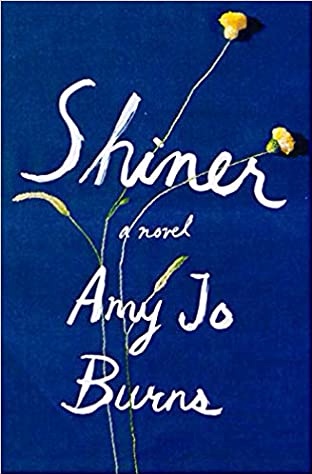
Review: Shiner (by Amy Jo Burns)
Though much of the narrative revolves around Briar Bird, the snake handling preacher who rules the mountaintop with his 'White Eye' legend, the heart and soul of the story are actually the "women who give this mountain its splendor" but who get nothing in return — women like Ruby (Briar's wife), Ivy (Ruby's best friend), and Wren (Briar and Ruby's teenage daughter). I love the strong female characters in this story, all of whom have no choice but to forge their own path of survival in a land of men whose power often went unchecked and unchallenged. This is also a story about the complexities of human relationships and how messy and convoluted they can become.
Structure-wise, the narrative is divided into 4 main sections, each told from the perspective of one of the main characters: Wren (the snake handler's daughter), Ivy (the fearless best friend), Flynn (the moonshiner). Through these segments, we gradually gain insight into the lives of these characters: their triumphs and tragedies, their joys and their heartbreaks, their strengths and their fragilities. Having said that, I thought it was interesting how central of a role Briar played as the instigator of nearly every negative incident, yet we get to hear from every other character except him — whether this was done deliberately or inadvertently, I don't know, but I feel it was a brilliant move nonetheless, as it gives voice to those who are expected to stay hidden: the wives and daughters living in the mountains of Appalachia, isolated from the outside world, not necessarily by their own choice.
This is the type of book that is difficult to read due to its subject matter, yet at the same time, it's also an absolutely necessary and worthy read. With its themes of doing the best with the little you have, finding strength in the face of desperation and suffering, survival through sheer determination and grit, the overall tone of the story is melancholic and despondent, yet also hopeful, especially with Wren's coming of age story and her will to survive in spite of the fates her mother and Ivy suffered.
This is a debut that I highly recommend, one that perhaps takes a little patience to read, but definitely worth the effort. I look forward to reading more from this author.
Thursday, October 28, 2021
Review: The Hidden Child (by Louise Fein)
After having finished this one, I will say that I'm glad I took a chance on it, as it gave me better insight into the historical context behind why people back then had the attitudes and beliefs they did (even though I disagree with them completely). I also appreciated the writing, which I felt was well done overall (though some of the narrative did meander a bit, but not to the point of hugely impacting my reading experience).
My frustrations with this book were mostly with the characters — specifically the 2 main characters whose alternating perspectives the narrative was told from. Edward and Eleanor Hamilton are a wealthy, happily married couple in England who are both proponents of the eugenics movement for their own personal reasons, but Edward is a stronger believer due to his profession. When their sweet and beautiful four-year-old daughter Mabel starts to experience epileptic seizures, with each one more frequent and severe, their perfect lives shatter. The decision is made that Mabel, with her shameful illness, must be hidden away in order to protect the family's honor as well as Edward's work in eugenics. But things get worse from there, to the point that Edward's and Eleanor's marriage teeters on the verge of collapse.
To be perfectly honest, I found both Edward and Eleanor very difficult to like — not just because of the views they espoused, but also their personalities and the way they behaved throughout the story, annoyed for about 75% of the story. At certain points, I felt there was a lot of time spent by both of them attempting to justify their views and it got to be a bit too much in my opinion. I was hoping there would be more focus on Mabel, since her illness was technically the catalyst of the entire story, but there wasn't as much on her as I expected. While both characters did end up having redeeming qualities that came into play later on, I think by that time, my frustration with them was too palpable to overcome.
Having said all that, I think the story overall was a good one and it's obvious the author, Louise Fein, was meticulous in her research. While I did have issues with some aspects of the story, it was still an eye-opening read, one that I feel was well worth the effort. I heard that Fein is working on her third novel, which I'm definitely looking forward to reading!
Monday, October 18, 2021
Review: If We Were Villains (by M.L. Rio)
My Rating: 3.5 stars
This was a book club read for me and I have to say that if it hadn't been chosen as the month's read, I probably would not have picked it up on my own. The format of the book (in terms of chapter titles) is setup similar to a play, which is fitting given that the story is about a theater troupe at an art college devoted entirely to Shakespeare. There is a short prologue at the beginning of each "Act" that takes place in the present, where thirty-two year old Oliver Marks, who has just been released from prison, starts to recount parts of his story to Detective Colborne — the man who put him in prison in the first place. From there, we are taken back to 1997, where 7 young actors, all theater majors, are finishing up their fourth year at Dellecher Classical Conservatory in the small town of Broadwater, Illinois. As these actors study Shakespeare and reenact his various plays, playing roles that more or less mirror their real-life personalities (or not), there comes a point where the "acting" spills over into reality and soon, one of them ends up dead. As the investigation starts up, each of the remaining students becomes a suspect at some point and the quest to find out the truth, especially amongst a group of elite actors, becomes a near impossible mission.
Even though I was able to figure out the "mystery" as well as the ending way early on, this was by no means a traditional suspense thriller. It wasn't an easy read either — not necessarily because of the subject matter, but more because I had to put my "scholar" hat on in order to wade through much of the text, which I wasn't expecting. For nearly 50% of the book, nothing much seemed to happen aside from scene after scene of Shakespeare re-enactments. There were also a lot of quotes and references to Shakespeare's various works that I felt at times were a bit excessive, especially for someone who may not be as familiar with his repertoire. Most of the beginning sections of the story actually went over my head and I felt lost because I didn't understand the references for one, and two, I had no idea what the author was trying to do or where the story was trying to go. It wasn't until a little after the halfway mark when things started to pick up a bit and I finally figured out what was going on, that I become more engrossed in the story. By the time I got to the end, I finally understood how cleverly this story was actually written and while I did appreciate it, I was a bit too exhausted by the point to care as much as I probably should have.
Don't get me wrong though — I definitely feel that this was worth reading, it's just that I probably was not the best audience for it. I think if I had been more of a fan or a "scholar" of Shakespeare's works, this would've been a much more immersive read and I probably would've gotten more out of it. As it is, the only Shakespearean play I had studied in depth back during my school days was Romeo and Juliet (which is probably why I enjoyed the scenes in the book related to that play the most) — majority of the other ones mentioned in the book I had heard of and might have even read at some point, but never actually studied (which is perhaps why I don't remember most of them). For me personally, I probably would've enjoyed this more if it had fewer Shakespeare references and quotes (and focused more on the "murder mystery" perhaps), but then again, it likely would've become an entirely different story then. Regardless of my experience though, I feel that this was a strong debut and the right audience will definitely love it.
Wednesday, October 13, 2021
Review: Three Sisters (by Heather Morris)
In her third novel, Heather Morris once again brings us a tale of tragedy, heartbreak, and survival through the story of Slovakian sisters Cibi, Magda, and Livi Meller. When they were only a few years old, the three sisters made a promise to their father that they ended up keeping for the rest of their lives: that the three of them would always take care of each other and watch out for one another no matter what happens in their lives. Several years later, their beloved father is dead, but the promise they made to him continues to live on. When Livi, the youngest of the sisters at 15 years old, is ordered to Auschwitz, 19 year old Cibi decides to go with her. Though Magda is spared due to being away while the Nazis make their rounds, she is captured a few years later and also sent to Auschwitz. Together again, the sisters not only fulfill the promise to watch after each other, they also make another promise — the fierce will to live and survive the horrors of the camp, no matter what. During the death march, the sisters are able to find a way to escape, but after they return home, they realize that their lives will never be the same.
While I like the story and appreciate Morris's efforts in relaying the Meller sisters' experiences through each of their perspectives, I felt that the writing was bit too simplistic and oftentimes felt detached from the narrative. I found it difficult to engage with the story on the emotional level that I was expecting to, primarily because the writing lacked depth and so the emotional scenes felt like they had less impact. I don't know if what I'm conveying makes sense, but after having read both of Morris's previous novels (both of which had moved me deeply), I unfortunately didn't feel the same connection to this one, despite how much I wanted to. The way some parts were written I felt bogged the story down, to the point that I actually ended up skimming some sections instead of actually reading each word like I normally would.
Having said all that, I do appreciate what Morris tried to do here, which was to relay the sisters' courage and resilience in surviving the camps and rising above the tragedies they experienced to ultimately live full and flourishing lives. This third book definitely has a more hopeful and uplifting tone than the previous two, which I also appreciated. The sisters' story is amazing on its own merit and absolutely a must read, especially given how few Holocaust survivors remain who are willing to share their stories. Despite the issues I had with the writing, I'm glad I got the chance to be introduced to the Meller sisters and no doubt I'll be seeking out more of their story on my own.
Friday, October 8, 2021
Review: Oh William! (by Elizabeth Strout)
Lucy Barton is back! This time around, we are reunited with Lucy during the later years of her life, when she is in her sixties. Her two daughters Chrissy and Becka are both adults now and married with lives of their own, while her ex-husband William (the father of her daughters) has now moved on to marriage number three. Despite having separated decades ago, Lucy and William continue to be good friends and are always there for each other during all of life's ups and downs. This is why, when a dramatic change occurs in William's life at the same time that he discovers a long-buried secret about his mother, the first person he thinks of to call is Lucy. Together, they embark on a "journey" of sorts back to his mother's past — throughout which, in true Lucy Barton form, leads to an introspection on life, love, and family (both her own as well as her husband's).
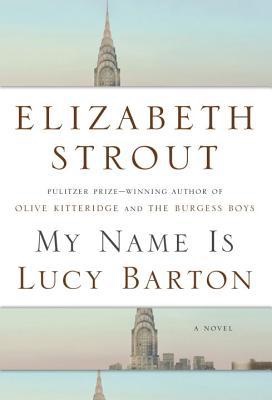
While I loved this one overall, I have to admit that it did not have as huge of an impact on me that My Name is Lucy Barton did (for me, that book was a 5 star read all the way through!). It's hard to describe exactly — perhaps because there seemed to be more focus this time around on details about other peoples' lives and less on Lucy reflecting about her own life. Or perhaps the connected stories format from the first book as well as the shorter chapters that gave glimpses into various aspects of Lucy's life just worked better for getting the message across.
Either way though, this was definitely a worthwhile read and I absolutely enjoyed getting to reunite with Lucy, even if it was only for a short while. Between the Lucy Barton and Olive Kitteridge books, Elizabeth Strout has definitely solidified her status as one of my favorite authors. In addition to reading the rest of her backlist, I'm of course also interested in seeing what else Strout may have in store for us down the road. I will essentially read anything she writes at this point!
Received ARC from Random House via NetGalley.
Sunday, October 3, 2021
Review: My Name is Lucy Barton (by Elizabeth Strout)
Friday, October 1, 2021
Review: Cloud Cuckoo Land (by Anthony Doerr)
Anthony Doerr's masterpiece All the Light We Cannot See is one of my all-time favorite books. I read it with my book club several years ago and the beautiful writing as well as the captivating storyline absolutely blew me away. The reading experience I had with that book remains one of the most memorable for me, even after the dozens of books I've read since then.