Showing posts with label Elizabeth Strout. Show all posts

Wednesday, May 20, 2026

Review: The Things We Never Say (by Elizabeth Strout)

My Rating: 5 stars

I didn’t think that I could love another Elizabeth Strout character as much as I love Olive Kitteridge and Lucy Barton but gosh darn it, Artie Dam has definitely earned a place at the top alongside my two favorite characters from the Strout universe!

On the outside, Artie seems to live a happy life – he has a teaching job he loves, a son he adores, a wife with whom he has spent more than three decades, friends and neighbors he often hangs out with, and so much more.  Yet on the inside, Artie struggles with a profound sense of loneliness – a feeling that is compounded by the anxiety he feels about the chaotic state of the world (the story takes place around the time of the 2024 election) – all of which combine to push him into what seems to him like a perpetual state of despair and gloominess.  Outwardly though, Artie is his usual self – humorous, kind, intelligent, and always making a difference to those around him (especially his students) in one way or another. When Artie discovers a secret that has been kept from him for many years, he is forced to re-examine his life, his relationships, and the people closest to him, leading him to question how it is possible to not actually know someone despite being so close to them for so long.

As is her style, Strout writes movingly yet realistically about the human condition, with its many trials and tribulations, mundanities and cruelties, and both its beauty and ugliness which, more often than not, can co-exist in surprising ways.  On an emotional level, I understood Artie in ways I didn’t expect – specifically, his ponderings about relationships and our inability to know each other, even with our closest, most intimate family members.  I’ve honestly felt this way with my own family on numerous occasions and as I reflect upon my own relationships with them, I realize how applicable Artie’s sentiment truly is.  I also can’t help but marvel at how very aptly the title of the book ties into the story – which, at its core, really is about all the things we never say, whether it’s because we “can’t” or “won’t” say them.

One thing I do have to mention (which I kind of alluded to already earlier in my review) is that our current political situation plays quite a huge role in the story.  Now, I’m not normally keen on books that incorporate politics into the story, especially contemporary politics, and usually this is a dealbreaker for me – but this book ended up being an exception.  The reason is not because it was written by one of my favorite authors, but rather, the way that the political situation was incorporated made sense within the context of the story and its characters (and it was not heavy-handed, which I appreciate).  Of course, everyone’s tolerance of this will be different, which is fine, but I personally did not have a problem with it.

With her latest novel, Strout presents us with an entirely new cast of characters (and a new setting too, as this story is set in Massachusetts rather than her usual go-to of Maine) and I ended up loving this one so much more than her previous novel Tell Me Everything (which I enjoyed, but not as wholeheartedly, as the main highlight of that book for me was the long-awaited meeting between Olive and Lucy, but that was only a small portion of the story) – perhaps because this time around, I was fully invested in not just the story, but also all the characters (both the main characters and the supporting ones).  Though with all that said, there IS an Olive-related easter egg in the story, though it’s subtle and can be easy to miss (especially for those who may not be familiar with Strout’s previous works), so Olive fans definitely keep an eye out. 

As I was putting my thoughts together for this review, it dawned on me that many of my most favorite contemporary authors (Elizabeth Strout, Ann Patchett, Fredrik Backman, Lisa See, just to name a few) have something in common that is one (though not the only) reason why I love them so much:  they all have the distinct ability to write about the human condition in ways that resonate and really hit home.  Though I’m not sure if there will be another Artie book (there might not be given what happens in the story), I still look forward to encountering these characters again at some point.  Either way though, one thing is for sure and that is, I will continue to read whatever Elizabeth Strout writes, no matter what!

Sunday, September 22, 2024

Review: Tell Me Everything (by Elizabeth Strout)

My Rating: 4 stars 

I’ve been in a bit of a weird reading slump lately.  I use the word “weird” because even though I’ve actually been reading – quite a bit, to be honest – I’ve been finding it difficult to “get into” what I read.  I guess the best way to put it is that I’ve been finding it hard to focus – essentially, I would read a paragraph, a page even, but then a few seconds later, I would have no idea what I just read, so I would go back and re-read.  The result is that it is taking me way longer than usual to finish a book, which is definitely not good considering the number of books on my list that I still need to get to.  Given that I’ve been super busy with both work and school (and family) the past few months especially, I suspect that I might just be burned out from everything I have going on.  Hopefully, as things start to wind down in the next few months and I am finally able to squeeze in some much-needed vacation time to recharge, I will be able to get my reading life back on track.  In the meantime, I will just need to push through the best I can.


One of the books I read during this time is Elizabeth Strout’s newest novel Tell Me Everything.  Strout is one of my favorite authors, so I’ve been looking forward to this one for quite some time.  While I did enjoy this one overall, I will admit to having a hard time getting into it for at least the first third of the novel.  I did eventually find my rhythm however, and I’m glad I did, since two of my favorite characters from the Elizabeth Strout universe – Olive Kitteridge and Lucy Barton -- finally meet and interact in this novel. Since the previous few Strout novels have been about Lucy, I was honestly beginning to miss Olive, so I was delighted to see that she has a significant presence in this novel (she is now 91 years old and living in a center for seniors, but she is the same old Olive – as sharp and loveably acerbic as ever!).  Lucy is introduced to Olive by Bob Burgess (yes, the same Bob from The Burgess Boys) and the two end up meeting frequently to share stories with each other. Given how opposite the two ladies are from each other personality-wise, of course there would be inevitable clashes (actually, after their first interaction, which, let’s just say didn’t go exceptionally well, I thought the two of them meeting would only be a one-time deal) – luckily for me, they continued to meet throughout the rest of the novel, so I got to enjoy their interactions to the end.  Overall though, this story is actually about Bob, the semi-retired lawyer who takes on the case of Matt Beach, a local man accused of killing his own mother.  At the end of the day though, the “mystery” element takes a back seat to the main goal of the story, which is to catch up with this eclectic community of Crosby and Shirley Falls residents as they go about their normal lives. 


I don’t want to give too much away (though, honestly, there really is not much to give away in the first place, since Strout’s novels famously focus on character rather than plot so not a whole lot happens anyway), but one thing I will say is that if you’re a Strout fan who has read all of her novels, then this is definitely a must-read, as she brings back pretty much all of the characters from her previous 9 novels (Oprah’s website has a nifty chart that illustrates which characters show up in which novels – the final count is that 23 of the 25 characters from Strout’s universe are in this new novel, which is wild!). 


Personally, since I’ve only read the Olive Kitteridge and Lucy Barton novels, the scenes with the other characters didn’t have as much meaning for me (which is why I rated this 4 stars instead of the 5 stars that I usually give Strout’s books), but that’s okay, as Strout’s writing is as masterful as ever, so this was still a treat to read.  In one of her author interviews, Strout was asked whether she will revisit these characters again – she responded that it’s hard to say, as it depends on whether the opportunity presents itself again (she said she wasn’t intending on writing another novel with these same characters at first, but she realized after her last novel that all the primary characters – Olive, Lucy and William, Bob and Margaret, etc. -- happened to be living in close proximity to each other now, so it just made sense to have them all interact).  Strout mentioned that the next novel she is working on so far has brand new characters, but it’s still in early stages, so we’ll see.  Whatever the case, I know I will definitely be keeping an eye out for whatever Strout decides to come out with next, regardless of which characters are in it!


Received ARC from Random House via NetGalley.

Monday, September 19, 2022

Review: Lucy by the Sea (by Elizabeth Strout)

My Rating:  5 stars

This was a pandemic novel I didn't know I needed!  With Elizabeth Strout being one of my favorite authors, I will pretty much read anything she writes — so of course I was ecstatic to have been approved for an early copy of her latest novel, Lucy by the Sea,which brings back one of my all time favorite Strout characters, Lucy Barton.  This time around, it is the very early stages of the COVID pandemic and Lucy is whisked away to Maine by her ex-husband William, who, as a scientist, knows a thing or two about the situation going on with the virus.  Lucy agrees to go with him to the isolated house by the sea for what they both think will be "only a few weeks" (one of my favorite scenes was early on in the book when Lucy is in her apartment packing her things and trying to decide what to bring for what she anticipates will be a short stay in Maine — the laptop scene was classic "Lucy and William bantering over the most mundane things" and I loved the familiarity of it!).  As the weeks turn into months, the situation escalates, with Lucy and William eventually going into pandemic lockdown as things around the world become more and more dire. 

Just like with the previous Lucy books, we as readers essentially live inside Lucy's head the entire story as she narrates her day-to-day experiences (whether good or bad), observations, and feelings toward everything that happens.  As Strout does brilliantly with each of her novels, she provides keen insights into the human condition through her characters' astute observations and empathetic, heartfelt emotions that reflect the realities of our everyday lives.  One difference this time though, is that many of Lucy's experiences and sentiments hit extremely close to home, given the timeframe spanning recent events such as the pandemic lockdown, the George Floyd murder and subsequent protests, the January 6th insurrection, etc. — resulting in shared feelings of anxiety, fear, unease, and a sense of feeling unmoored in a country becoming more and more divided. 

I read Oh William! last year and while I did enjoy that one, I felt that focus was more on William's story rather than Lucy herself, and in that sense, it felt a little less relatable than the first book My Name is Lucy Barton did.  This new book, Lucy by the Sea, brought the focus back to Lucy, which I definitely appreciated, as it gave me the same poignant, relatable vibe that the original one did, which made me love this one just as much.

Fans of the Lucy Barton series will no doubt love this newest sequel, though it's definitely recommended to read the previous books before this one (except Anything is Possible, which is part of the series but doesn't focus as much on Lucy herself — I still need to read this one myself).  Also, Elizabeth Strout fans who have read her other books will love the Easter eggs scattered throughout the story, especially the appearances by other characters who featured prominently in some of her other works.  This added a "fun" element to the story that helped to balance out some of the "heaviness" of the subject matter for me. While I'm not sure if there will be another Lucy book after this one, I will absolutely read whatever else Strout comes out with in the future!

Received ARC from Random House via NetGalley.

Friday, October 8, 2021

Review: Oh William! (by Elizabeth Strout)

My Rating:  4 stars

Lucy Barton is back!  This time around, we are reunited with Lucy during the later years of her life, when she is in her sixties.  Her two daughters Chrissy and Becka are both adults now and married with lives of their own, while her ex-husband William (the father of her daughters) has now moved on to marriage number three.  Despite having separated decades ago, Lucy and William continue to be good friends and are always there for each other during all of life's ups and downs.  This is why, when a dramatic change occurs in William's life at the same time that he discovers a long-buried secret about his mother, the first person he thinks of to call is Lucy. Together, they embark on a "journey" of sorts back to his mother's past — throughout which, in true Lucy Barton form, leads to an introspection on life, love, and family (both her own as well as her husband's).


While I loved this one overall, I have to admit that it did not have as huge of an impact on me that My Name is Lucy Barton did (for me, that book was a 5 star read all the way through!).  It's hard to describe exactly — perhaps because there seemed to be more focus this time around on details about other peoples' lives and less on Lucy reflecting about her own life.  Or perhaps the connected stories format from the first book as well as the shorter chapters that gave glimpses into various aspects of Lucy's life just worked better for getting the message across.


Either way though, this was definitely a worthwhile read and I absolutely enjoyed getting to reunite with Lucy, even if it was only for a short while.  Between the Lucy Barton and Olive Kitteridge books, Elizabeth Strout has definitely solidified her status as one of my favorite authors.  In addition to reading the rest of her backlist, I'm of course also interested in seeing what else Strout may have in store for us down the road.   I will essentially read anything she writes at this point! 


Received ARC from Random House via NetGalley.

Sunday, October 3, 2021

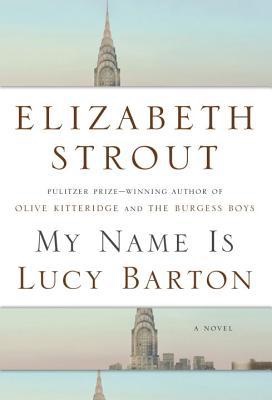
Review: My Name is Lucy Barton (by Elizabeth Strout)


My Rating: 5 stars

After reading both of the Olive Kitteridge books a few years back, I immediately put Elizabeth Strout on my list of favorite authors.  As I had mentioned at that time, I've had most of Strout's works on my TBR for a while, but hadn't gotten around to reading all of them.  Now I am slowly working my way through her backlist and decided to pick up My Name is Lucy Barton next, mostly because I got approved for an ARC of Strout's newest book publishing this month and it is a more direct sequel to that book (though technically the third in the entire series) so I want to make sure I read it first. 

I was actually surprised by how short this book was (less than 200 pages), yet it packed such a punch in terms of depth of the story as well as its characters.  Strout is a masterful writer and just like she did with Olive Kitteridge, she once again creates a realistically flawed yet highly memorable character in the form of Lucy Barton.  While recovering in the hospital from what she thought would be a simple operation, Lucy is surprised to see her mother, from whom she had been estranged for many years, go visit her and sit by her bedside for several days.  Together, mother and daughter reminisce and gossip about various friends from Lucy's childhood growing up in Amgash, Illinois (though they are careful to skirt around the specific issues that had caused Lucy to escape her troubled family and move to New York after marriage).  The visit from her mother, though brief, leads Lucy to reflect upon various aspects of her life — from recognizing the impact of the poverty and abuse that she grew up with, to seeing the vulnerabilities present in her marriage, to realizing her desire to become a writer, to understanding that even her unconditional love for her own two daughters does not guarantee that love will always be reciprocated.   

Many of the struggles that Lucy reflects upon are ones that many of us can relate to, regardless of differences in background and status.  With that said, Lucy's role as a daughter and the nuances of her relationship with her mother resonated the most with me, as there were quite a few moments where I recognized aspects of her relationship with her mom (and with her family as a whole) that were similar to what I had experienced.  One particular conversation that Lucy had with her mom especially jolted me — the one where Lucy uses a certain word that surprises her mother, who in turn, comments that she must have learned to use that word after moving to the big city, to which Lucy replied that she didn't have to move to a big city to learn such things.  In that moment, Lucy could've called her mom out on her "willful ignorance" of the things that were happening under her roof at the time (things that contributed to the strain in their relationship all these years), yet she chose to keep her mouth shut.  Reflecting on this moment later, Lucy writes "I suspect I said nothing because I was doing what I have done most of my life, which is to cover for the mistakes of others when they don't know they have embarrassed themselves."  In reading this, I realized this is exactly what I've been doing with people in my own life, but especially with my mother whenever she says things (often in front of others) that are hurtful or insulting — in that one sentence, Strout (through Lucy) helped put words to something I've struggled with for a long time.  It is the power of being able to experience resonant moments like these that motivates me to be a lifelong reader — constantly learning, understanding, and reflecting on various aspects of my own life.

I know Strout wrote another book, Anything is Possible, that is a continuation of Lucy's story in a sense, though she is only a small part of that book in that she returns to her hometown to visit her siblings, but mostly it is a collection of short stories about people she reunites with there. While I do intend to read this second book at some point, I'm actually more excited to read her newest book, Oh William!, where Lucy tells her first husband's story.  Definitely can't wait!

Tuesday, November 5, 2019

Review: Olive, Again (by Elizabeth Strout)

My Rating: 4 stars

In this sequel to the Pulitzer Prize-winning Olive Kitteridge, we once again get to revisit the town of Crosby, Maine and our old friend Olive, who is now entering her sunset years in what is possibly the last decade or so of her life, with new husband Jack in tow. As fierce and brash as ever, Olive is still insufferable at times and continues to be stubborn to a fault, but yet, she also seems more empathetic this go around, which I attribute to the fact that she has come to a somewhat better understanding of herself (ok, perhaps only slightly, haha).  Of course, Olive being Olive, the usual brutal honesty is expected, but she has also learned to be a bit more aware of other people's feelings and in that regard, understands how to let things go a little when circumstances call for it (though still depends on who she is interacting with).  

Structure-wise, we have the same short story format told from the perspective of different characters, nearly all residents of Crosby (with a few returning characters from the first book), but this time, I felt like more of the stories centered on Olive, and even the stories that were about others seemed to incorporate her presence a bit more directly.  For some one like me who is not a huge fan of short stories, this continuity of course worked better for me, since it made this read less like a series of short stories and more like a continuous novel.   One of the things I appreciate most about the sequel compared to the original is that this time around, we get more humorous moments with Olive — not that she deliberately tries to be funny, it's just that seeing the way she would react to certain situations made me chuckle (such as the entire baby shower segment and also her row with Jack about flying first class).

The original Olive Kitteridge was written in 2008, while this sequel Olive, Again was just published last month (October 2019).  To be very honest,  this book doesn't feel like it was written 11 years after the first one — when I picked it up and started reading, the transition between the 2 books was so seamless that I felt like I was merely continuing on from the first book.  Elizabeth Strout's writing continues to be masterful and despite only having read 2 of her books (so far), she can already be counted amongst my list of favorite authors.

Olive is the type of character who will probably never be "endearing" (she herself would never permit it anyway), but she IS a character who, like those in the most beloved of classics, will live forever in the hearts of readers like me who were lucky enough to have made her acquaintance.  I will most certainly miss Olive, but I am also grateful for the amount of time (the span of two books) that I was able to spend with her.

Received ARC from Random House via NetGalley.

Friday, October 25, 2019

Review: Olive Kitteridge (by Elizabeth Strout)


 My Rating: 4 stars

I recently got approved for an ARC of Elizabeth Strout’s latest work Olive, Again, which is the sequel to her Pulitzer Prize-winning Olive Kitteridge back from 2008.  Seeing that I don’t usually like to read sequels without first having read the original, I decided to take a break from working through my miles-long ARCs list so that I could get acquainted with Olive in preparation for tackling the sequel.  Despite having many of her books on my TBR, Elizabeth Strout is another famous author whose works I’ve not had the chance to read yet (what can I say except “too many books, too little time”), so I actually welcome the opportunity to finally experience one of her works for myself.  

Going into this, I will admit that I was a bit apprehensive at first, since I had heard that this book is written in a unique “novel in stories” format – that is, the book is comprised of 13 short stories, all set in Crosby Maine, told from the perspective of different characters, yet the stories are all linked together through the one character of Olive Kitteridge.  I’m usually not a fan of short stories, as I don’t like the “abruptness” that the short story format naturally lends itself to – I prefer novels with a full-length story that has a beginning, middle, and ending…a more in-depth story that I can immerse myself into, with characters that I can watch grow and develop over time.   But of course, this book is not your typical short story collection in that each story is connected through Olive, the one constant who somehow manages to make her way into each story, oftentimes subtly and unpronounced (except in the stories where she is actually the central character).   In some of the stories, Olive is a quiet presence; in others, she is a force to be reckoned with – regardless of how she may appear though, Olive’s distinctive “voice” as a character is strongly felt throughout the book.  I appreciate the interesting way Strout decided to approach the character of Olive in here – even though she is not the main character in most of the stories, we (as readers) still get to see her growth and development as she grapples with the various situations that occur in the town.  Olive is an interesting character – definitely not the “tolerable” type, and at times, she even comes across as downright annoying, but there was a certain authenticity to Olive as a character that made her really come alive for me despite her limited appearance in many of the stories.  In terms of the writing, this was smoothly and beautifully written, with what I felt was a solid balance of subtleness versus fierceness where it was warranted.  In the way Strout depicted the mundane and the minutiae of everyday life while providing insight into the trials and tribulations that many of us are bound to encounter, there was a resonance to each of the stories presented here.  

This was definitely a different reading experience for me, one that I enjoyed immensely more than I expected.  As I get ready to tackle the sequel in the coming days, I look forward to revisiting Olive and her “irrational sensitivities” once again.