Showing posts with label published in 2020. Show all posts

Saturday, March 7, 2026

Review: No Time Like the Future: An Optimist Considers Mortality (by Michael J. Fox)

My Rating: 5 stars

With his iconic roles in television (Family Ties, Spin City) and film (Back to the Future, Teen Wolf, etc.), Michael J. Fox is no doubt a Hollywood legend. Growing up in the 1980s, I’ve always admired Mike’s work as an actor – his comedic timing and trademark sense of humor especially – but over the years, what has turned me into a bona fide fan of his is witnessing his battle with Parkinson’s, the disease with which he was diagnosed at the young age of 29.  In addition to his devoted advocacy work in the area of Parkinson’s research and raising awareness of the disease, Mike’s approach to life – his constant optimism and positivity as well as his ability to face adversity with consistent grace and humor – is nothing short of amazing, moving, and absolutely inspiring.

Prior to this one, Mike had written two memoirs detailing his journey, but this latest memoir stands apart in that it came out during the pandemic, when the idea of mortality was a very real and very serious concern for so many of us.  In the decade leading up to that time, Mike himself experienced several major health challenges that put his optimistic outlook to the test, including the discovery of a tumor in his spinal cord that required not only risky surgery but also a grueling recovery process, as well as a broken arm resulting from a devastating fall in his kitchen (an unintentional, but in his mind, avoidable, injury that also nearly broke his spirit).  In having to deal with these health challenges on top of his daily co-existence with Parkinson’s, Mike is forced to reassess his optimistic outlook and reflect on the reality of having to face mortality head-on.

As someone with a more cynical bordering on pessimistic outlook on life, I found Mike’s memoir both moving and uplifting, but most important of all, it put some of my own struggles into perspective.  Listening to Mike narrate this book via audio was especially powerful, so I would definitely recommend experiencing his memoir via this route if possible.

Despite the challenges, Mike continues to stay strong and active to the extent that he can be, which is great to see, but most significantly, he continues to remain positive and keep up his sense of humor, which I’m sure is not easy.  I wish him and Tracy and their wonderful family the best of luck!

Saturday, November 22, 2025

Review: Hamnet (by Maggie O'Farrell)

My Rating: 5 stars

From its publication date in 2020, I’ve had a copy of Maggie O’Farrell’s novel Hamnet both on my TBR and on my bookshelf, but for reasons I won’t get into, I never got around to picking it up. It wasn’t until recent months, with the awards buzz around the critically acclaimed film adaptation making the rounds, that I was reminded I still had the book on my shelf waiting to be read, so I figured, perhaps now would be a good time to read it.

Going into this one, my expectations were high, as many of my bookish friends love O’Farrell’s works and praise this book as being her most masterful and exquisite, so of course, I had to experience it for myself.  Now after having finished reading this, I have to say that, yes, my friends were absolutely correct – though in addition to masterful and exquisite, I would also characterize O’Farrell’s writing here as both sublime and beautiful.  From the novel’s first line, I immediately felt transported back to the England of the 1500s, drawn in by the story of these two ordinary families – one living in an apartment on Henley Street and the other on a farm called Hewlands – and the extraordinary couple that emerges from their midst.  O’Farrell’s rendering of their backstory is both haunting and atmospheric, with its nonlinear jumps between past and present as well as the emotionally nuanced undertones that breathtakingly brought all the characters to vivid life. 

For the record, I am not much of a Shakespeare fan and have only read a handful of his plays (with Romeo and Juliet, unsurprisingly, being my favorite) – and it’s important to note that I have not read the famous play directly associated with this novel (though of course, as an English Literature major, I’ve had to read and analyze excerpts from Hamlet so I do have some familiarity with it).  For those who might be in the same boat as me and are concerned about whether the lack of Shakespearean literary bona fides will impact the reading experience here, I would say don’t worry about that because the focus of this story is actually not on Shakespeare.  In fact, the bard’s name is never even mentioned in the story – instead, he is either referred to based on his relationship with others in the story (i.e.: John and Mary’s son, Agnes’s husband, Hamnet’s father, etc.) or if he is mentioned individually, he is called, simply, the Latin tutor.

Rather than Shakespeare, this story is actually about his wife Anne Hathaway, who is referred to as “Agnes” in the story (in her Author’s Note, O’Farrell explains that most people know Shakespeare’s wife as Anne, but her father Richard Hathaway named her “Agnes” in his will, so O’Farrell decided to follow that example).  Labeled by many as eccentric and unconventional – a “forest witch” who seems to have the power to heal through her natural tonics and potions as well as the ability to see into people’s souls – Agnes is nonetheless a loving and fiercely protective mother who finds her world torn apart when her beloved son Hamnet dies from the plague.  O’Farrell portrays the intensity of Agnes’s grief over the loss of her son in ways both palpable and heartbreaking, to the point that I could actually feel her pain.  The last scene of the story was especially poignant and moving, with the last line continuing to haunt me even days after I finished reading this book.

This beautifully rendered reimagining of a little known aspect in the life of a literary giant is definitely a highly recommended read!  I’m not sure if I will end up watching the adaptation but I’m glad that it triggered the opportunity for me to finally read O’Farrell’s masterpiece.


Sunday, February 12, 2023

Review: Becoming Duchess Goldblatt (by Anonymous)

My Rating:  3.5 stars

Let me say up front that I don't care much for social media.  Yes, I do have accounts on all the major platforms, but I created those more out of necessity than anything else.  I guess you can say that I "tolerate" social media in that I use when it when I have to (for example — to connect with a friend or distant relative or to research or get information on something), but outside of that I rarely post anything and rarely interact with anyone.  For the record, I have nothing against social media itself — it's more that the experience is not for me, as I find the pressure of constantly having to "keep up" with the trends and conversations on there extremely exhausting and stressful, and I basically have neither time nor patience for any of it.

Given the above, it should probably come as no surprise that I had never heard of the fictional Internet personality Duchess Goldblatt prior to reading this book.  In fact, this book probably would never have come onto my radar if one of my book clubs hadn't chosen it as a monthly read.   This is actually a memoir by an anonymous author who writes about how she came to create an alter ego on social media that is so beloved across legions of her devoted fans.  The author encountered a lot of loss and tragedy in her life and in efforts to parse her grief (not to mention the incredible loneliness she felt at the time), she created Duchess Goldblatt on a whim, not expecting the character to attract as much attention as it did.  Indeed, the Duchess can count among her followers many famous names in the literary community, such as Elizabeth McCracken, Alexander Chee, Benjamin Dreyer, Celeste Ng, Laura Lippman, etc.  But for the author, one of the most meaningful experiences that Duchess Goldblatt gave her was the opportunity to develop a close friendship with her real-life long-time idol, singing legend Lyle Lovett.   The author's candid conversations with Lyle (both as herself and as Duchess Goldblatt) were a lot of fun to read and I felt that's one of the things that made this book so special.  

Overall, I found this to be an interesting read.  I appreciated the candor with which the author recounted key moments of her life and the various struggles she went through.  There were parts that I resonated with deeply and wholeheartedly— such as this paragraph where the author's boss calls her into the office to praise her for doing a great job at work:  "Outperforming other people is of no interest to me.  It certainly doesn't motivate me.  If anything, it makes me feel a little guilty. I was raised not to show off, not to be proud, not to draw attention to myself.  I don't like people looking at me or standing too close. Compliments make me uncomfortable.  My greatest childhood dream was to be an author whom everyone would read but no one would look at directly, but I couldn't figure out a way to write books without people knowing my name."  I love this quote because it describes my exact sentiments as well.  I also related to the insecurities and vulnerabilities that the author felt about herself, as I struggled with these at various points in my life as well.  With all that said, the parts I didn't enjoy as much were the quotes and excerpts from the Duchess Goldblatt social media accounts — don't get me wrong, I liked the concept of it and I definitely appreciated the author for creating something that gave so much joy and comfort to so many people, but for me personally, the excerpts were distracting. Basically, I preferred to read about the author herself (this is a memoir after all) more than about her fictional Internet persona.  

Even though this one turned out different than I expected, I'm still glad I read it, as it was a pretty unique experience overall.   Given the author's desire to remain anonymous, I admire her willingness to share her personal story with so many people (I know I wouldn't be able to do it for sure).  I wish her the best of luck! 

Sunday, December 26, 2021

Review: Joy at Work (by Marie Kondo and Scott Sonenshein)

My Rating: 3.5 stars

I received this book as a Christmas gift from one of my friends who is a huge Marie Kondo fan. While I did enjoy this one quite a bit, some parts I felt were repetitive and mostly stuff I had heard before — this was mostly chapters 4 and on, where Kondo's co-writer Scott Sonenshein writes about tidying as it pertains to digital work, time management, decisions, and networks. To be honest, when I read the "note to reader" at the beginning of the book and discovered that, out of 11 chapters, Kondo only "primarily wrote" 4 of the chapters, I did feel a bit disappointed — I mean, I knew going in that this would be a collaborative effort between Kondo and Sonenshein, but I guess I was expecting the writing to be either more evenly distributed between the two or Kondo being the primary author, since she does have more of the name recognition after all (case in point — I know my friend, for one, bought this book purely because of Marie Kondo's name of the cover…she has absolutely no clue who Scott Sonenshein is). The other thing too is that, as I was reading, I noticed distinct differences between Kondo's writing style and Sonenshein's, so when both were mashed together for this book, I felt that the flow was kind of odd and, for me at least, it did affect the reading experience more than I was expecting it to.

Having said all that, content-wise, I felt like this was one of the better "how to organize your work life" books that I've read (and I've read plenty of similar books over the course of my 20+ years working in corporate America). What made this one different in my opinion was the tone and the approach. Business self-help books (at least the ones I've read) tend to be "overly preachy" to the point that they can turn a reader like me off fairly quickly — not just because the content can sometimes be unrealistic and/or irrelevant to my job situation (i.e. turn off your email for a few hours or shut your office door to visitors for the day!), but also because the tone is often heavy-handed, with a "one method fits all" approach where oftentimes, you are made to feel like something is wrong with you if you don't follow the writer's advice. With this book, I didn't get that vibe at all — in fact, I got the opposite vibe in that the emphasis was on how everyone's situation is different and to do what works best for you (or not). As I've said before, I can't stand "overly preachy" books, especially ones with what I perceive as a pretentious tone that essentially try to guilt-trip the reader towards a particular direction, so it was refreshing to see that this one didn't take that route.

Overall, I did like this book, but as I mentioned above, I definitely would've liked it better if Kondo had been the sole author. Though I'm not a Marie Kondo fanatic like my friend, I do have a lot of admiration and respect for her work and appreciate what she has been able to achieve over the last decade. And while the effectiveness of her methods is subjective in that it might or might not be a right fit for certain people, I think what she has going for her (and why her methods are easier to accept) is her positive attitude (with a focus on joyfulness) as well as her non-aggressive approach that is very different from what we may be used to here in the United States. If Kondo does write another book at some point, I look forward to reading it. Meanwhile though, I should probably go check out her show on Netflix (I'm not a huge TV watcher anymore nowadays, as I don't have the time that I used to, but I'm willing to make an exception in this case).

Saturday, November 13, 2021

Review: How Much of These Hills is Gold (by C. Pam Zhang)

My Rating: 4 stars

I've actually been wanting to read this book since it came out last year, but hadn't gotten around to it until recently, when one of my book clubs chose it as a monthly read. Going into this one, I will admit that I was a bit wary, as I'm not a fan of westerns (which is what this was billed as), but I was attracted to the premise of a story about a Chinese immigrant family in the American West during the gold rush era, which, of course, is not often seen in mainstream fiction. Now after having finished this, I would say that it was definitely different from what I expected, both in its bold, lyrical writing as well as in the way the story technically defied categorization in terms of genre and theme — there were elements of a western, yes, but there were also historical elements as well as magical realism that drove aspects of the story.

Majority of the story is told from the perspective of Lucy, who is twelve when we first meet her. Her Pa has just passed away and with her Ma gone for 3 years already, she and her eleven year old sister Sam are now left to fend for themselves in the mountains of the West. As they set off to bury their Pa, Lucy and Sam encounter situations that test the strength of their bond as siblings, as well as their ability to overcome their family's past. The narrative later moves further back to the past and explains the backstory to this family, giving us insight into how a Chinese family such as theirs ended up in a community where few others looked like them. Initially lured to the "golden mountains" by the promise of gold and riches, the reality couldn't be more different — weighted down by a secret in their past as well as the instability of prospecting, they switch to a grueling living by coal mining, which unfortunately does little to improve the family's situation. A third narrative moves the story 5 years after Pa's death, with Lucy and Sam reuniting again after having gone their separate ways — both siblings have changed in some ways, but underneath, they are also still the same. They decide to set off again, together this time, in pursuit of a better life in a place they can truly call their own.

This was an emotional read and one that was so beautifully written — lyrical, poetic, and so full of imagery. With that said though, as much as I loved the style of writing, I felt like the beauty of it transcended the story a bit — I'm not sure how to explain it, but I felt like, at times, I got so caught up in the depiction of a scene that I actually forgot where I was in the story and had to go back and reread. There was also an abstract quality to the writing that sometimes overshadowed the plot itself. From a historical perspective, as a few other reviewers already pointed out, there were some inaccuracies that those familiar with the time period and the history of the Chinese workers in the U.S. during that time may not be able to overlook, though for me personally, it didn't bother me too much.

In terms of character development — Lucy and Sam were characters I couldn't help but love, regardless of whatever flaws they may have had. I connected deeply with both characters, to the point that I didn't want the journey with either one of them to end. Perhaps it is because of my affinity for both of them that I didn't take to the ending too well (and that's all I'm going to say about it so as not to give anything away).

Overall, this was a worthwhile read that I definitely recommend, one that I'm also glad I finally got around to reading, however belatedly. This was a strong debut from C. Pam Zhang and I definitely look forward to the next work from her.

Saturday, November 6, 2021

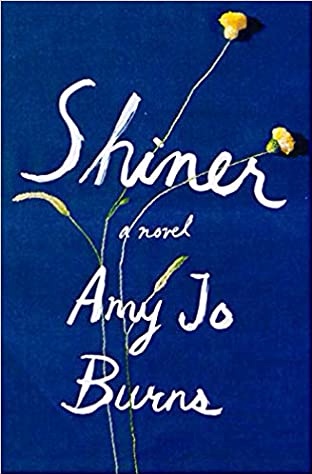
Review: Shiner (by Amy Jo Burns)

My Rating: 5 stars

I had actually received an ARC of this book over a year ago and even though, at that time, I had every intention of reading it, life unfortunately got in the way and that was that.  It wasn't until recently, when one of my book clubs chose this for our monthly read, that I remembered about the ARC, so I went and dug it up.  I will admit that the slow pace of the story in the beginning turned me off a bit initially, as did the characters, several of whom I found annoying at first with the way they behaved.  What drew me in though was the beautiful, immersive writing — almost lyrical in its cadence — and as soon as I started to understand what the author, Amy Jo Burns, was trying to do with the story, I became fully engaged in the lives of these characters, several of whom I grew to love by the end of the story.  

Though much of the narrative revolves around Briar Bird, the snake handling preacher who rules the mountaintop with his 'White Eye' legend, the heart and soul of the story are actually the "women who give this mountain its splendor" but who get nothing in return — women like Ruby (Briar's wife), Ivy (Ruby's best friend), and Wren (Briar and Ruby's teenage daughter).  I love the strong female characters in this story, all of whom have no choice but to forge their own path of survival in a land of men whose power often went unchecked and unchallenged.  This is also a story about the complexities of human relationships and how messy and convoluted they can become.

Structure-wise, the narrative is divided into 4 main sections, each told from the perspective of one of the main characters: Wren (the snake handler's daughter), Ivy (the fearless best friend), Flynn (the moonshiner).  Through these segments, we gradually gain insight into the lives of these characters: their triumphs and tragedies, their joys and their heartbreaks, their strengths and their fragilities.  Having said that, I thought it was interesting how central of a role Briar played as the instigator of nearly every negative incident, yet we get to hear from every other character except him — whether this was done deliberately or inadvertently, I don't know, but I feel it was a brilliant move nonetheless, as it gives voice to those who are expected to stay hidden: the wives and daughters living in the mountains of Appalachia, isolated from the outside world, not necessarily by their own choice.

This is the type of book that is difficult to read due to its subject matter, yet at the same time, it's also an absolutely necessary and worthy read.  With its themes of doing the best with the little you have, finding strength in the face of desperation and suffering, survival through sheer determination and grit, the overall tone of the story is melancholic and despondent, yet also hopeful, especially with Wren's coming of age story and her will to survive in spite of the fates her mother and Ivy suffered.

This is a debut that I highly recommend, one that perhaps takes a little patience to read, but definitely worth the effort.  I look forward to reading more from this author.

Received ARC from Riverhead Books via Edelweiss.


Thursday, August 12, 2021

Review: The Whispering House (by Elizabeth Brooks)

My Rating: 2 stars

I really wanted to like this book. The premise sounded interesting and based on the little I'd heard about the book, I was anticipating an atmospheric page-turner with serious gothic vibes. Actually, for the first 40-50 pages or so, I felt like this was the case, as the author did a pretty good job of setting the scene and creating intrigue around the house at the center of the story, Bryne Hall. Unfortunately it didn't last — for me, the story started to unravel early on, when the main character Freya Lyell returns to Bryne Hall again after her cousin's wedding and nonsensically inserts herself in the lives of Cory and Diana Bryne. Technically, there wasn't really a plot to speak of, as nothing much happens — but what annoyed me was that the little bit of plot that did happen was far-fetched and unrealistic. This was one of those stories where you pretty much have to suspend disbelief the entire time you're reading, otherwise it's hard to get through. 
 
Normally, I'm okay with lack of plot if the character development is good and I'm able to connect with the characters in some way. Sorry to say, this wasn't the case here — not only was every single character in this story very unlikable, they also felt like stereotypically-drawn caricatures going through the motions. The main protagonist, Freya, especially frustrated me to no end. One of the things I absolutely can't stand in books are grown up, adult characters who act like petulant children, as well as female characters who are portrayed stereotypically (i.e.: weak, hysterical, naive, irrational, emotional, wushu-washy, etc.) — unfortunately for me, Freya was both of these and worse. I hated how pretty much every single thing Freya did, every decision she made, was done in a way that made no sense whatsoever. From the get go, Freya is portrayed as naive and foolish, which I guess is the author's way of perhaps justifying why she makes one reckless decision after another throughout the entire story. Having said all that though, my biggest pet peeve is when the female character knows that doing certain things or going down certain paths is self-destructive and/or will for sure result in negative consequences either for herself or for others (oftentimes the character actually tells us so via her wn inner dialogue), yet she still insists on going forward with the decision — then, when others (usually a friend or family member) try to warn her or talk sense into her, she either goes ballistic and pushes the person away or she does the denial thing by playing dumb and pretending nothing is wrong. And that's just Freya — as if one annoying character wasn't enough, the author had to include an entire cast of them! Freya's father Roger was a jerk, her sister Stella was reckless, Cory Bryne was a delusional psychopath and his mother was a sinister witch — the only decent person in the story was Tom, but even he turned out to be annoying with his wishy washy personality.

Overall, I would have to say that this was a disappointing and frustrating read for me. The writing for the most part was decent, though I felt like the "gothic" vibe and the mystery piece totally didn't work — if this was supposed to be a psychological suspense novel, it completely failed in that aspect, as the main plot points were predictable (I pretty much figured things out already within the first few pages) and the intrigue of the "house" at the center of the story was overshadowed by the loathsomeness of its occupants. In the end, I also felt the story dragged out for way too long, though I think that was because, at that point, I couldn't bring myself to care anymore. While I'm not one to DNF a book once I've started reading, I do believe that, based on sheer annoyance level alone, this one would've been an exception — the only reason I didn't is due to this being a book club read, which made me determined to push through it. With that said, the reviews for this one seem to be all over the place, so I would say read both the positive and negative reviews to get a more balanced perspective before deciding whether to pick this one up.

Tuesday, July 13, 2021

Last One Out Shut Off the Lights (by Stephanie Soileau)

My Rating:  3.5 stars

Last One Out Shut Off the Lights is an interesting collection of short stories, all set in Louisiana, and featuring ordinary people going about their everyday lives.  The various protagonists in these stories range from teenagers to senior citizens, and through their voices, we get a glimpse of what life is like living in the type of last-chance town where things always feel as though they are in a constant state of flux.  The setting looms large in these stories, and in many ways, can be considered a character in and of itself, lending a hugely atmospheric nature that serves as a backdrop to each story.  

Of course, as is usually the case with short story collections, some were hits and some were misses, though all shared the common feelings of incompleteness and lack of closure to them.  With that said, I did like how all the stories explored issues of identity and belonging in ways both subtle and obvious — but most significantly, each story felt realistic and relatable in some manner. One of the things that struck me after I finished reading was how "ambivalence" could manifest itself in such varied ways — a sentiment that the author, Stephanie Soileau, demonstrated in a masterful way through the very different characters in each of the stories.  

Overall, I enjoyed this collection, even though I wasn't necessarily able to resonate with each character or with each story.  The many blurbs for this collection describe the stories as striking, fierce, evocative, empathetic, engaging — I agree with all of these, though I would also add "cleverly and thoughtfully" written, as each story gave me pause and made me ponder, in a way that I wasn't expecting.  I also learned a lot about Louisiana  — a state that I knew little to nothing about outside of the city of New Orleans being located there and also what had been in the news about Hurricane Katrina.  This is a collection I definitely recommend, a worthwhile read that I'm glad to have discovered (this was Jesmyn Ward's July pick for her book club on Literati).  It's also a relatively short read, but one that doesn't skimp on details in its depiction of Louisiana life and culture.

Sunday, April 18, 2021

Review: Writers and Lovers (by Lily King)

My Rating:  5 stars

Lily King's newest novel 
Writers and Lovers came out last year and even though I'd never read her works before, so many of my reader friends recommended this one to me that I ended up buying a copy with the hopes of getting to it soon (but of course, didn't get a chance to unfortunately). Therefore, when one of my book clubs chose this for our read of the month, I knew this was the best opportunity to finally pick this one up, so I made sure to schedule it in for this month, no matter what.  I'm so happy I did, as I ended up loving this one so much!   

I enjoy reading stories about characters who go on some type of personal journey of self-discovery and eventually they come into their own, where they either realize their full potential or recognize something about themselves that they were previously unaware of (or had been suppressing to the point that they don't remember its existence).  This was certainly the case for this story's main character Casey Peabody, a thirty-one year old aspiring writer struggling through the many challenges of her life, including (but not limited to):  a writing career that might be over before it ever officially takes off, a waitressing job that enables her to pay the rent on the moldy little shed that she lives in but sucks the life and joy out of her, mountains of debt from student loans that have rendered her poor and broke, potential health issues from not being able to afford to see a doctor in years, etc (yes, that's not even all of it). Emotionally, she is a wreck, as she's not only reeling from a recent failed relationship and breakup, she is also grieving for her mother, who died suddenly and unexpectedly while on a trip.  Aside from her brother Caleb, who lives thousands of miles away, Casey only has 2 friends left: Muriel, a fellow writer who stuck with the profession and actually became successful, and Harry, her eccentric co-worker at the restaurant she waitresses for — having these two friends to confide in seems to be the only "positive" thing that Casey has got going for her at the moment.  Lost and trying to find herself, Casey meets two fellow writers — Silas, a young, poor, struggling writer just like herself, and Oscar, an older, much more accomplished writer who was recently widowed, left to raise 2 charming little boys on his own — and finds herself torn between the two men, which only adds more stress to her life.  

Casey is a character whom I connected with on so many levels, even though our lives and backgrounds couldn't be more different.  For me, the part I was able to relate to the most was Casey's determination in continuing to pursue her writing despite the odds, and even with everything seemingly working against her.  As a once-aspiring writer myself who got sidelined by the realities of life (not to mention also buried under mountains of debt) and has since given up all hope of pursuing a writing career, I admire Casey's persistence as well as her ability to stay true to herself despite everything she is up against.  I wish I'd had the fortitude and the drive she did when faced with so many challenges all at the same time. One of the scenes from the book that resonated most with me was when Casey is sitting at her desk staring at what she's written so far and reflecting on the encounter she just had with her jerk of a landlord Adam, who had insulted her with "I just find it extraordinary that you think you have something to say"...though she doesn't respond to his face, she tells us (the readers) this:  "I don't write because I think I have something to say.  I write because if I don't, everything feels even worse."  Reading this line brought tears to my eyes because it summed up so perfectly my own personal writing journey — for me, writing is therapy of sorts, it's a way for me to cope with difficult situations and an outlet that helps me "deal with" some of the real-life issues bogging me down physically, mentally, and emotionally. So many of the struggles that Casey experiences on her writing journey, I've also experienced at some point in my own life.  The connection I felt to Casey definitely made her an easy character to root for, even during the moments when I disagreed with some of the decisions she made.

One of the other things I loved about this book was the writing, which I found to be exquisite and beautiful in the way it brought forth Casey's voice and personality.  The book's jacket summary states that Lily King wrote this story with her "trademark humor, heart, and intelligence" which perfectly describes how I feel about what King was able to accomplish here.  Having Casey narrate the story from her own first person perspective was very fitting and worked so well here.  I loved Casey's "voice" in this story, specifically the way she would never be afraid to admit her own vulnerabilities, but most of all, how she was still able to maintain her sense of humor even when so many things were going wrong in her life. 

It's not often that I read a book where I had too many favorite scenes to count — this book was definitely one of them!  In addition to all the scenes where Casey interacts with Oscar's two boys (both of whom were super-cute!), I also loved all the scenes that showed Casey's thought process while writing, but my most favorite of all was about a third of the way into the book when Casey interviews for a writing job at a charity organization and they have her write a thank you letter to one of the donors — it was a brief scene, only a few short paragraphs, but it made me laugh so hard because Casey's thought process as she was composing and typing that letter mirrors my own process whenever I sit down to a writing project (it can literally take me hours to write one paragraph because I keep deleting and re-writing in order to get the wording perfect).

In reading through the reviews, it looks like the reactions to this book have been a mixed bag — some readers loved it, some hated it, and a few fell somewhere in between.  I obviously fall into the "love it" category, but of course, that's based on my personal experiences and resonance to the story as well as the characters.  If you're interested in this one, I would suggest checking out both the positive and negative reviews to get a better sense of whether this one would work for you.  (As for me, I definitely just added another "favorite author" to my list!  Now to go back and read King's previous works, especially the much acclaimed Euphoria, which I already have a copy of on my bookshelf). 

Sunday, December 20, 2020

Review: The Vanishing Half (by Brit Bennett)


My Rating:  5 stars

Brit Bennett’s The Vanishing Half is a book that I’ve had on my TBR list for a long time.  Earlier in the year, before the book became one of the “must-read” books of the year, I had actually received an advance reader’s copy and had every intention to read it before publication, but those plans unfortunately fell apart due how chaotic those early months were for me.  Now that things have settled a little bit, I was hoping to utilize these last 2 weeks of the year to catch up on a few of the books that I wasn’t able to get to earlier -- of course, this one was at the top of the list (I ended up reading a finished copy of the book that I bought later rather than the ARC copy).  I’m definitely glad that I was able to squeeze this one in, as it turned out to be a 5 star read for me (and pretty sure it will be on my year end “2020 favorites” list as well).  

Through a narrative about the twin Vignes sisters and how their lives turn out so differently after one of them decides to “pass” as white, Bennett weaves a compelling and well-written story that not only spans generations, but also explores aspects of our country’s history as it pertains to racism and social acceptance (among other things).  The story alternates between the perspectives of the two sisters, Desiree and Stella, as well as their daughters Jude and Kennedy, and through their struggles with identity and belonging, we are given keen insight into our society’s contentious attitudes toward people of color.   Even though majority of the story took place before my time, the characters and what they went through felt so real to me.  On an emotional level, I resonated most with Desiree and Jude and the challenges they had to face that impacted all the choices they ended up making.  On the other hand, it was harder for me to accept Stella’s choices – while I understand her motivation for “passing” as white to make her life easier, and even lying about her family and her past to corroborate her story, the part that I couldn’t come to terms with was her adopting a racist attitude (specifically in relation to her interactions with the Walker family), especially given what had happened to her own father.   As much as I wanted to sympathize with Stella, I found her very difficult to like – in contrast, I did feel for her daughter Kennedy and the impact that Stella’s decisions had on how her life turned out.  

This brilliantly written novel is on so many “best of” lists this year and deservedly so!   More than an exploration of racism and identity though, there is actually quite a bit to unpack with this one that goes beyond what anyone would be able to cover in a review, which is why I don’t want to say too much here. I definitely suggest experiencing this one for yourself, as Bennett’s storytelling is engaging and immersive, but more importantly, the story itself is timely and relevant to a lot of what has been going on in society this past year.   For me personally, one of the things that made this an even more interesting read was the familiarity of the setting, as more than half the story takes place in Los Angeles, where I grew up and currently still reside.  When I read, I love being able to make connections with aspects of the story, characters, setting, culture, etc., as it makes the experience more immersive for me – with this book, the experience was extra special because, in addition to all of the places in and around LA that I recognized, my alma mater (the college I graduated from) was also mentioned, which I almost never see in novels I read, so I definitely got a kick out of that!  I haven’t read Bennett’s debut The Mothers yet, but seeing how much I enjoyed this novel (her second book), I may end up moving that one further up my TBR list as a priority read for next year. 

Received ARC from Riverhead Books via Edelweiss.

Sunday, December 13, 2020

Review: Fifty Words for Rain (by Asha Lemmie)

My Rating: 4.5 stars

This book was very nearly a 5 star read for me – that is, until the last 10 pages or so when I got to the ending, which frustrated me so much that my first reaction was wanting to throw the book against the wall (of course I didn’t do that, but only because I was reading on an electronic device and didn’t want to break it).   I think part of the reason why I reacted so strongly to the ending was because, up to that point, I was so emotionally invested in the story and the characters that it was hard for me to accept how things unfolded at the end.

As the main character, Nori stole my heart from the very first page, where we are introduced to her as an eight-year-old girl abandoned by her mother, left on the doorstep of her aristocratic grandparents’ estate in post-WWII Kyoto, Japan.  While Nori’s grandparents do take her in, they do so not because they care about her, but because they want to hide her from the world, as Nori’s dark skin is too obvious a reminder of the stain brought on the Kamiza family from their married daughter Seiko’s affair with an African American soldier.  Nori is banished to a life of solitary confinement in the attic, where her only companionship is the servant who sees to her daily needs.  Remembering her mother’s strict instructions to “obey in all things” and to do as she is told without question or resistance, Nori is obedient to a fault and does not fight whatever is done to her, whether it’s her grandmother’s monthly beatings or the chemical baths she endures daily in order to lighten her skin.  But all of that changes when the half-brother Nori never knew she had comes to live with his grandparents after his father dies -- as the legitimate heir to the Kamiza dynasty, Akira is doted on by a grandmother who is willing to give him the world as long as he takes his destined place in the family.   As Akira gets to know his half-sister, the siblings form a unique and close bond – a bond that their grandparents will try to break at all costs due to the impact it would have on the path that Akira is destined to lead.

Nori is a wonderfully-drawn character who came alive on the page for me — a character I couldn’t help rooting for from beginning to end.  I was drawn to her self-effacing charm, her curious nature, and most important of all, her strength in rising above the odds and defying the circumstances she was born into.  With everything she endures throughout the story, I admire the fact that Nori does not easily resign herself to her fate (which, for those who’ve read the book, would explain why I reacted to the ending the way I did).   Nori is one of those endearing fictional characters that I know won’t be easily forgotten, though I guess the same can also be said about her brother Akira, another character I absolutely adored.  I love the way the author, Asha Lemmie, wrote the dynamic between these two half-siblings who couldn’t be more different from each other, yet shared such a strong, formidable bond.  I was tremendously moved by their relationship and how special it was – it actually made me think about my relationship with my sibling and long for the type of bond these two had.  Needless to say, several scenes in particular brought me to tears – though I will also say that there were an equal number of scenes that made me angry, especially the ones involving the grandparents and the antiquated mindset that drove all of their actions.  It’s been awhile since I’ve read a book that made me smile, cry, and yell out in frustration, all within pages of each other.  This book invoked a myriad of emotions that actually still has me thinking about the story and its characters, even now, days after I’ve finished reading.  No doubt this is a story that will stay with me for a long time to come.

This is not an easy story to read by any means, but it is an important one, and despite the issues I had with the ending, I feel that Asha Lemmie did a fantastic job.  In all honesty, I’m still blown away by the fact that this is a debut novel because it definitely doesn’t read like one!  I don’t want to say too much more than I already have for fear of giving away the story, but I definitely highly, highly recommend this one, though with a caveat -- be prepared to experience an emotional roller coaster like I did.  I don’t know anything about Lemmie outside of what is in her bio, but I sincerely hope that this won’t be the only novel she writes – I am definitely looking forward to reading more from her. 

 Received ARC from Dutton via Edelweiss.

Wednesday, December 2, 2020

Review: Stories from Suffragette City (edited by M.J. Rose and Fiona Davis)

My Rating: 5 stars

I'm usually not a huge fan of short story collections and when it comes to books related to politics, I try to steer as far away as possible -- based on these two reasons alone, I most likely would not have picked up this book under normal circumstances.   However, I ended up being drawn to this anthology mostly because of the 13 authors involved, as several of them are among my favorites in terms of previous works of theirs that I've read and adored – plus this one being historical fiction definitely helped, since it's one of my favored genres to read.   Also, this anthology is different from the typical short story collection in that there is a distinct connection between all the stories:  the women's march for the right to vote that took place in New York City on October 23, 1915.   One of the things I loved about this collection was how each author was able to weave into each of their stories some of the themes from their own works, yet still have it tie so perfectly back to the theme of the collection and the specific events that took place.  I thought the flow of the stories was wonderful as well and I absolutely loved seeing some of the same characters "show up" in each other's stories, even if it was only for a small "blink and you'll miss it" scene.  I also loved the diversity of the women in the story and how they were from all different walks of life, with a variety of experiences and backgrounds, yet all were impacted by the suffrage movement in a meaningful way.   Overall, what blew me away with this collection was how well it was put together (especially given the confines of the premise):  the flow was seamless, the writing was stellar, the stories were compelling, and best of all, the characters were wonderfully drawn.  Of course, this should come as no surprise given the 13 authors involved with this collection are all accomplished writers at the top of their craft.  I went into this one with high expectations and it absolutely delivered!


As this book is meant to commemorate the 100thanniversary of the passage of the Nineteenth Amendment, I found this to be a fantastic tribute to all the women who played a role (whether directly or indirectly) in helping our voices be heard.   With most short story collections, each reader will usually have certain stories that they enjoyed more than others, but for me, that wasn't the case here – I can't say which stories I liked more because, to be honest, all the stories stood out and I loved all of them equally.   I definitely highly recommend this one, especially to historical fiction fans whom I'm sure will find much to enjoy with this collection, regardless of whether you've read these authors' previous works or not.  For me though, reading and loving this collection has inspired me to seek out the works of the other authors that I'm less familiar with and add those to my TBR list!


Received finished copy from publisher Henry Holt via BookBrowse First Impressions program.


Thursday, November 26, 2020

Review: White Ivy (by Susie Yang)


My Rating:  4 stars

This is one of those books that I feel does not fit nicely into any specific genre.  Majority of readers seem to put this under the thriller / suspense category, but to be honest, despite the story having a few surprises (I would hardly call them “twists and turns”), there really wasn’t a whole lot of “suspense” in most of the narrative, at least from what I could see.  If I had to categorize this, I would say that it goes best under contemporary fiction, since at its core, the story does explore many of the hot button issues that we see currently in our own society – issues such as immigration, wealth disparity between rich and poor, complicated family dynamics, assimilation versus cultural differences, social class and privilege, etc.  For me in particular, there was a lot to unpack with this story, and as I sat down to write this review, I struggled with the realization that what I write here is barely going to scratch the surface of all the thoughts that went through my mind as I read.  With fiction, I’m usually not a huge fan of highlighting passages while I read, as it breaks my flow and can be distracting at times, but with this book, I ended up highlighting a lot because so much of the story resonated with me.  Many of the coming-of-age experiences that the main character, Ivy Lin, went through in the story were very similar to what I experienced as a Chinese-American girl who grew up in an immigrant household very much like Ivy’s.   To be completely honest,  I was actually floored by how much Ivy’s upbringing and family dynamics resembled my own, to the point that, as I was reading, I actually felt like I was reliving my own childhood all over again.  Everything from the way the parents (and grandmother) behaved and acted, to the way Ivy interacted with them, the reactions of the friends around them, the pressure and stress associated with being a child of immigrants trying to navigate two different and often conflicting worlds while trying to understand her role in that world, the struggles with identity and trying to reconcile her family’s expectations with society’s cultural dissonance, right down to the feelings that Ivy struggled with throughout the story and how all of it ended up impacting her in a big way – all of it was familiar to me because so much of it was a lived experience for me (and for many of my Chinese friends as well).

With all that said, I do have put in a bit of a disclaimer here, as I approached this book very differently than most other readers probably did.  Having some form of personal connection to a story can change the way that story is read and experienced, which, for me, proved to be absolutely true with this book.  While most others likely approached this story more from the perspective of a plot-driven thriller, I came at it from a completely different perspective:  I read this more from the perspective of it being a coming-of-age immigrant story, which meant that the plot was secondary in that it was merely a way for me to understand this character of Ivy and why she ended up doing the things she did.   Of course, this by no means excuses Ivy’s actions or behavior or the fact that she deserves to be disliked because of not just her manipulative, deceitful ways, but also what she does to “fix” some of the mistakes she made.  In choosing to focus on the “why” –  specifically, the aspects of Ivy’s upbringing and the reality of her circumstances that undoubtedly played a role in the flawed person she became --  it allowed me to approach the character of Ivy with a sentiment that probably many others who also read this book would not have felt:  sympathy.  This is a sympathy bred from my familiarity with the upbringing and immigrant story that the author is trying to tell through Ivy (and her family).  On a personal level,  I know how it feels to grow up in a household where you are constantly reminded, day in and day out, that your parents gave up a life of comfort and familiarity in their home countries to move across continents, to a place that is foreign and where they don’t know the language, where the culture is completely (and in some instances, shockingly) different, where their talents back home can’t be utilized and they are viewed as second-class citizens, etc. – all of these sacrifices are because they want you, their child/children, to have a good future and hopefully live a better life than they did.  I understand, intimately in fact, the tremendous pressure and stress from having to constantly strive to meet these expectations while trying to navigate how to fit in to a society that isn’t exactly accepting of you either.  I also understand the constant uphill battle (a never-ending struggle that lasts your entire life) to reconcile your culture with the reality of your circumstances and the realization that, no matter how hard you try, it will never be enough, and you will find yourself forever straddling that precarious line between two clashing identities. 

Further than just shared experiences though, I also resonated with Ivy from an emotional perspective.  When it came to the feelings that Ivy experienced at different points in her life, particularly as it related to her family and cultural upbringing -- feelings such as shame, confusion, embarrassment, loneliness guilt, fear, regret, etc. – it brought back memories of all the times throughout my life where I can recall feeling the same way.  With all that said though, while I sympathized with Ivy, I also sympathized – perhaps even more deeply – with her younger brother Austin, who had such a minor role in the story, yet to me, the few scenes he was in and the things that happened in those scenes were actually the most significant in terms of understanding the family dynamics as well as the lasting impact those dynamics have, whether intentional or not.

If this review sounds a bit vague, note that it was deliberate on my part, as the book’s plot summary already said quite a lot and there really isn’t much else I can say without giving away more of the story than necessary.  With how much the story impacted me, of course I recommend this book, but with the caveat that your experience reading it will no doubt be different from mine.  Reading this book actually gave me goosebumps --  not because of the plot necessarily (though there are plenty of triggers in here, especially as it relates to sex and violence, that may be uncomfortable for some readers, so definitely keep that in mind) -- but rather, the memories that the familiarity of the characters’ experiences drew up for me.  Understanding that this is the author Susie Yang’s debut novel, I have no idea how much of the story’s background is related to her own or whether she is writing from a place of familiarity like I experienced.  But one thing I do know is that I am definitely interested in what Yang decides to write next – regardless of genre, I know for sure it will be a book that I’ll want to read!

Received ARC  from Simon & Schuster via NetGalley.